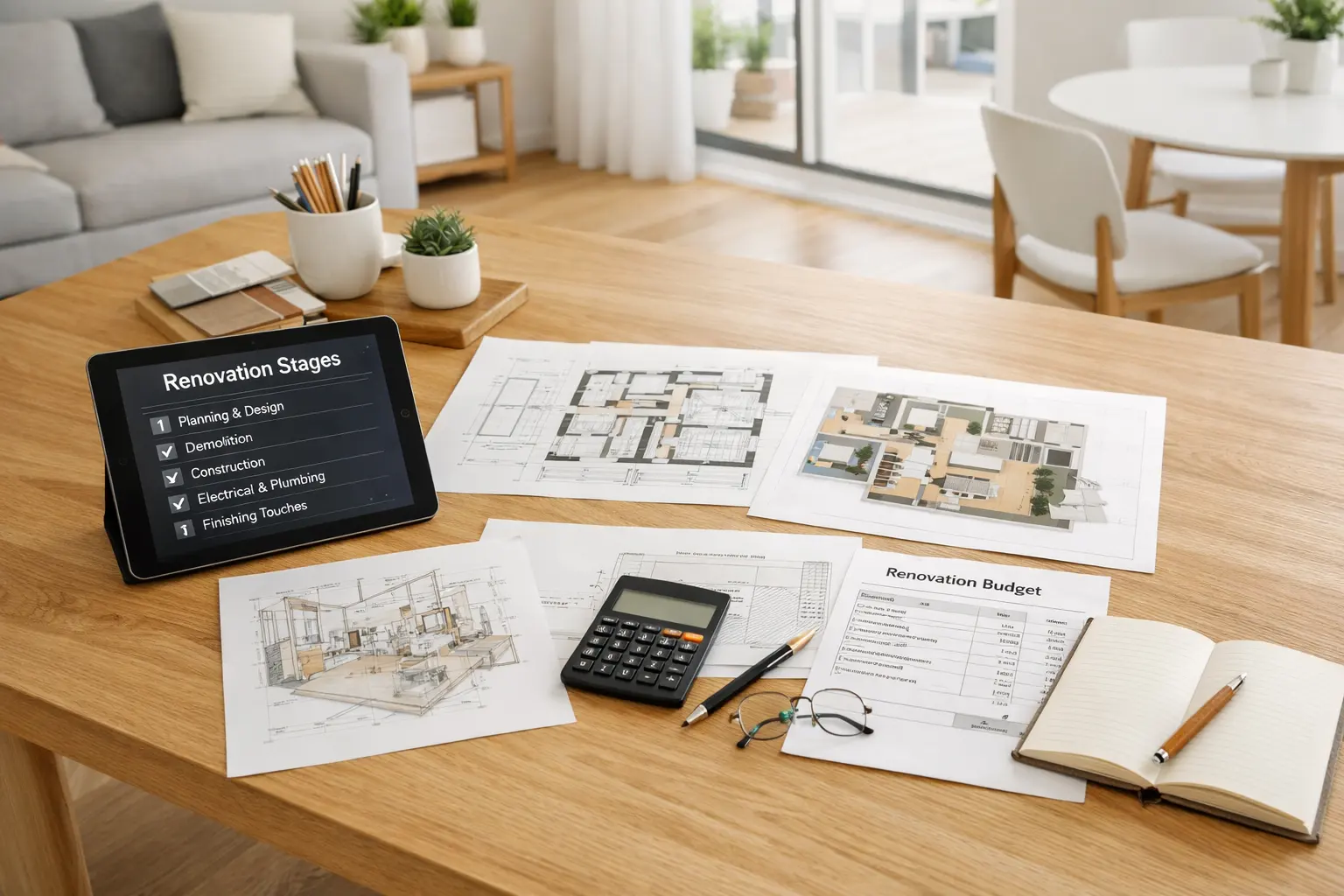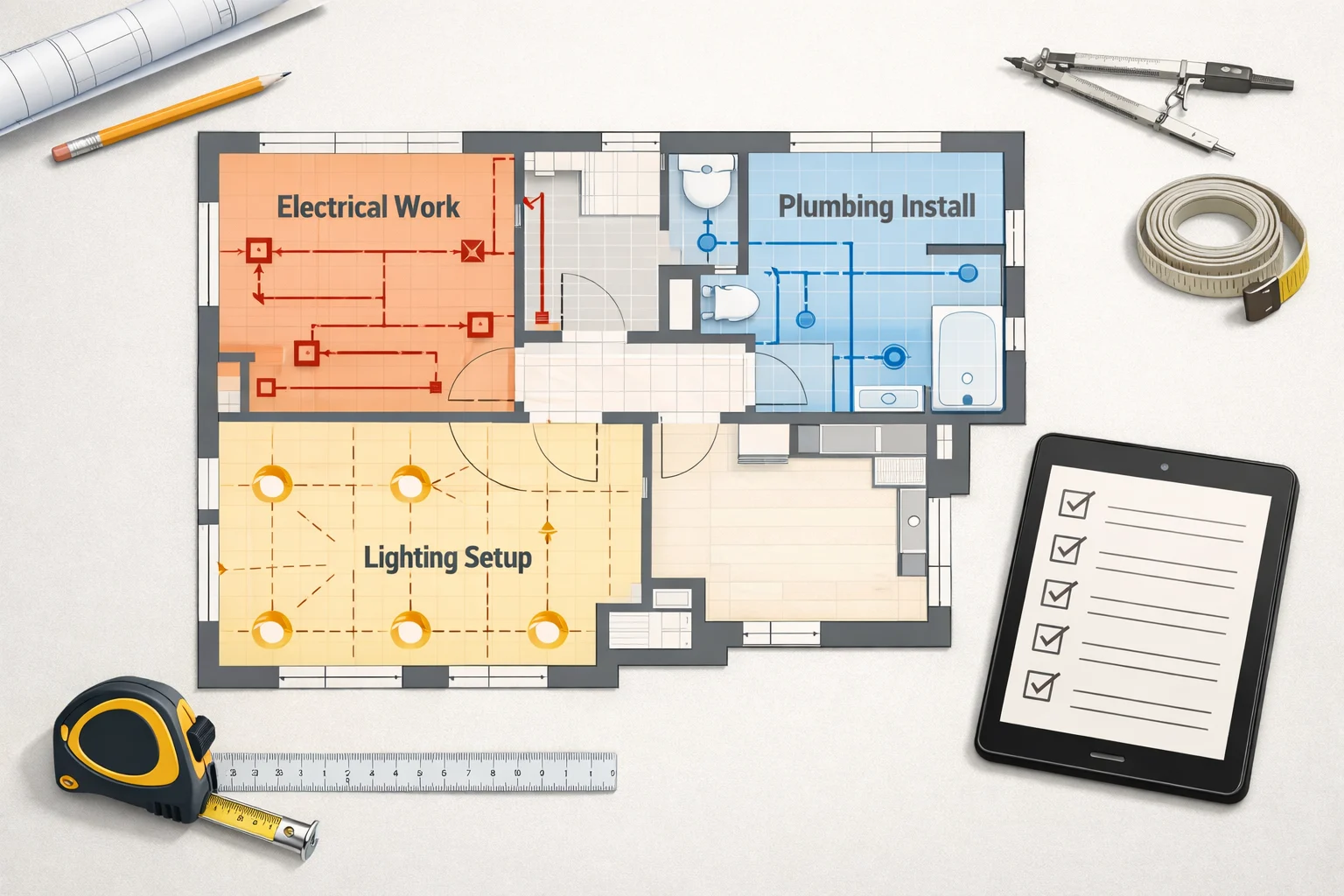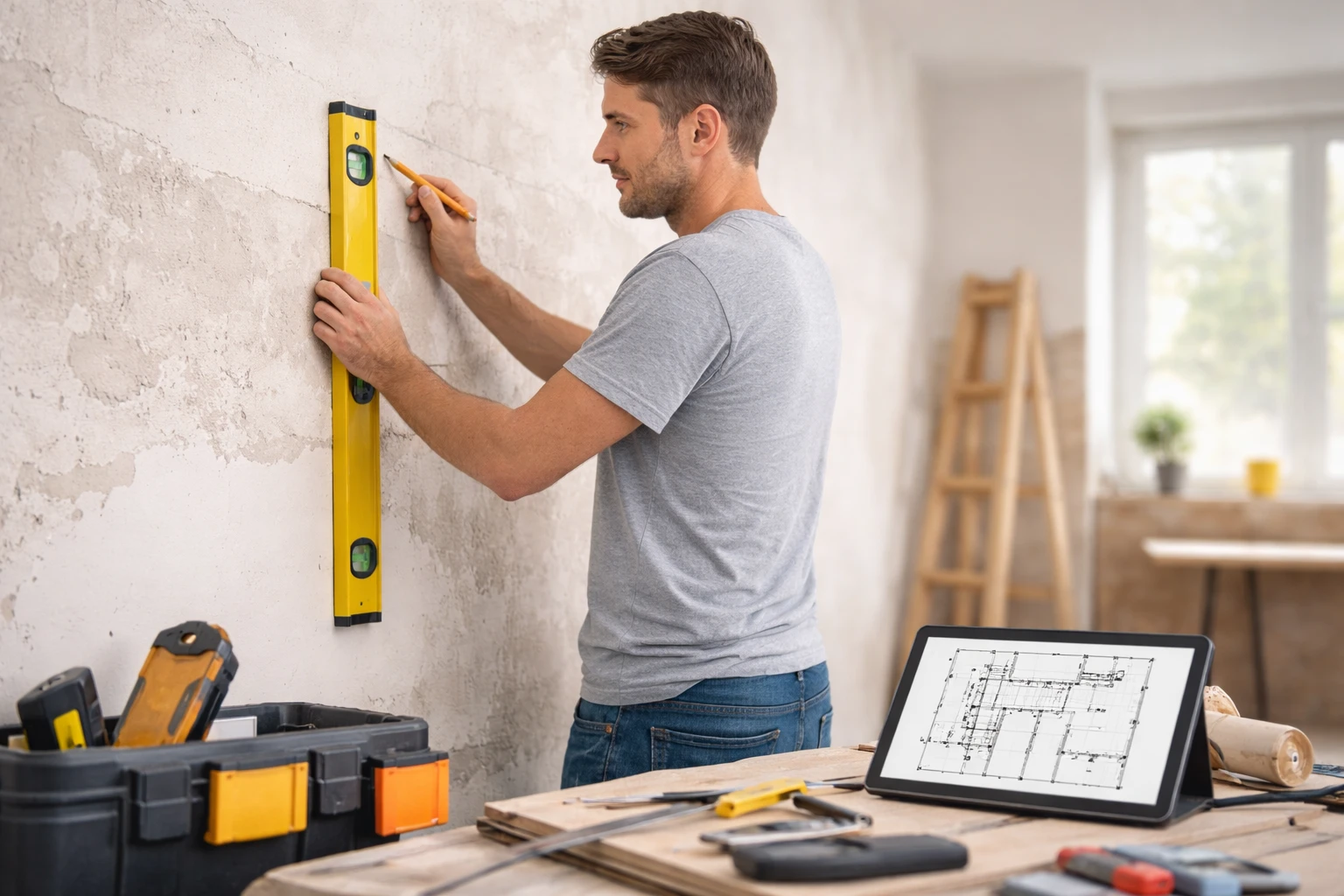
A DIY renovation can reduce labor costs, but only when the task matches your skill level, your tools, and the risk involved. Some jobs are safe and practical for most homeowners. Others are expensive to redo, hard to permit, or too dangerous to attempt without the right training.
This guide separates the work into clear buckets: easy DIY tasks, more advanced homeowner projects, jobs that should stay with professionals, how much you can save, what tools and preparation you actually need, and how to decide when a contractor is the better choice. If you want the broader project sequence, start with our home renovation guide and keep a renovation planning checklist close by.
DIY Renovation Tasks at a Glance
The table below gives you a quick way to sort common renovation work by difficulty, risk, and the most practical approach.
| Task | Difficulty | Suitable for DIY? | Main risk | Recommended approach |
|---|---|---|---|---|
| Painting walls and ceilings | Easy | Yes | Drips, poor prep, visible roller marks | A good first project if the surface is stable and dry |
| Removing wallpaper | Easy | Yes | Damaging plaster or exposing mold | Work slowly and stop if the wall is soft, damp, or cracked |
| Assembling furniture | Easy | Yes | Misread instructions, stripped screws | Follow the manual and keep hardware organized |
| Installing shelves, curtain rods, and accessories | Easy | Usually | Hidden wires or weak anchors | Check the wall type before drilling |
| Replacing cabinet handles | Easy | Yes | Misaligned holes or chipped fronts | Measure twice and drill once |
| Laminate or click flooring | Experienced | Maybe | Uneven subfloor, bad cuts, gaps | Good option if the room is dry and the base is level |
| Minor drywall repair | Experienced | Yes | Visible seams, cracking, poor finish | Start small and stop if the damage is structural |
| Basic tiling in dry areas | Experienced | Maybe | Lippage, uneven grout lines, adhesive failure | Use low-risk, dry surfaces only |
| Non-structural demolition | Experienced | Maybe | Hidden wiring, pipes, dust, debris | Inspect first and stop if the wall, floor, or ceiling is uncertain |
| Electrical, gas, structural, and wet-area work | Specialist | No | Safety, code, insurance, and costly rework | Use a licensed or qualified professional |
What Counts as a DIY Renovation?
A DIY renovation does not mean doing every part of the project alone. In practice, it usually means the homeowner handles low-risk work such as demolition, preparation, painting, finishing, simple installation, furniture assembly, and other cosmetic improvements while professionals handle the technical or high-risk parts.
A hybrid approach is often the most practical. You can clear the room, patch and paint surfaces, and assemble non-technical items yourself, then bring in trades for wiring, plumbing, waterproofing, or structural changes. That keeps the schedule realistic and reduces the number of areas where a small mistake becomes an expensive repair.
Easy DIY Renovation Tasks for Beginners
Beginner-friendly tasks are the ones with clear steps, basic tools, and limited consequences if you make a small mistake. They still require patience, but they are usually the right starting point for a homeowner learning how to manage a renovation.
Painting Walls and Ceilings
Tools: roller, brush, tray, drop cloth, painter's tape, sandpaper.
Difficulty: Easy.
Common mistake: skipping prep and painting over dust or damaged spots.
Stop and call a pro if: the wall is damp, cracked, or showing mold.
Removing Wallpaper and Loose Finishes
Tools: scraper, sponge, warm water or remover, protective gloves.
Difficulty: Easy.
Common mistake: pulling too aggressively and tearing the wall underneath.
Stop and call a pro if: the surface crumbles, shows asbestos risk, or reveals water damage.
Basic Surface Preparation and Small Patching
Tools: filler, putty knife, sanding block, vacuum, mask.
Difficulty: Easy.
Common mistake: patching too quickly and sanding before the filler cures.
Stop and call a pro if: the damage is spreading or looks structural.
Furniture Assembly and Simple Hardware
Tools: screwdriver, drill, level, tape measure, hex keys.
Difficulty: Easy.
Common mistake: rushing assembly and stripping fasteners.
Stop and call a pro if: the item needs wall anchoring into a weak or unknown substrate.
Shelves, Curtain Rods, Trim, and Baseboards
Tools: miter saw or saw box, studs finder, drill, finish nails or anchors.
Difficulty: Easy.
Common mistake: installing into the wrong wall type or cutting trim inaccurately.
Stop and call a pro if: hidden wiring, uneven framing, or moisture is present.
Basic Cleanup and Waste Sorting
Tools: trash bags, bins, labels, gloves, masks.
Difficulty: Easy.
Common mistake: leaving dust and debris in the room long after the work is done.
Stop and call a pro if: waste includes hazardous material or large heavy items that need special disposal.
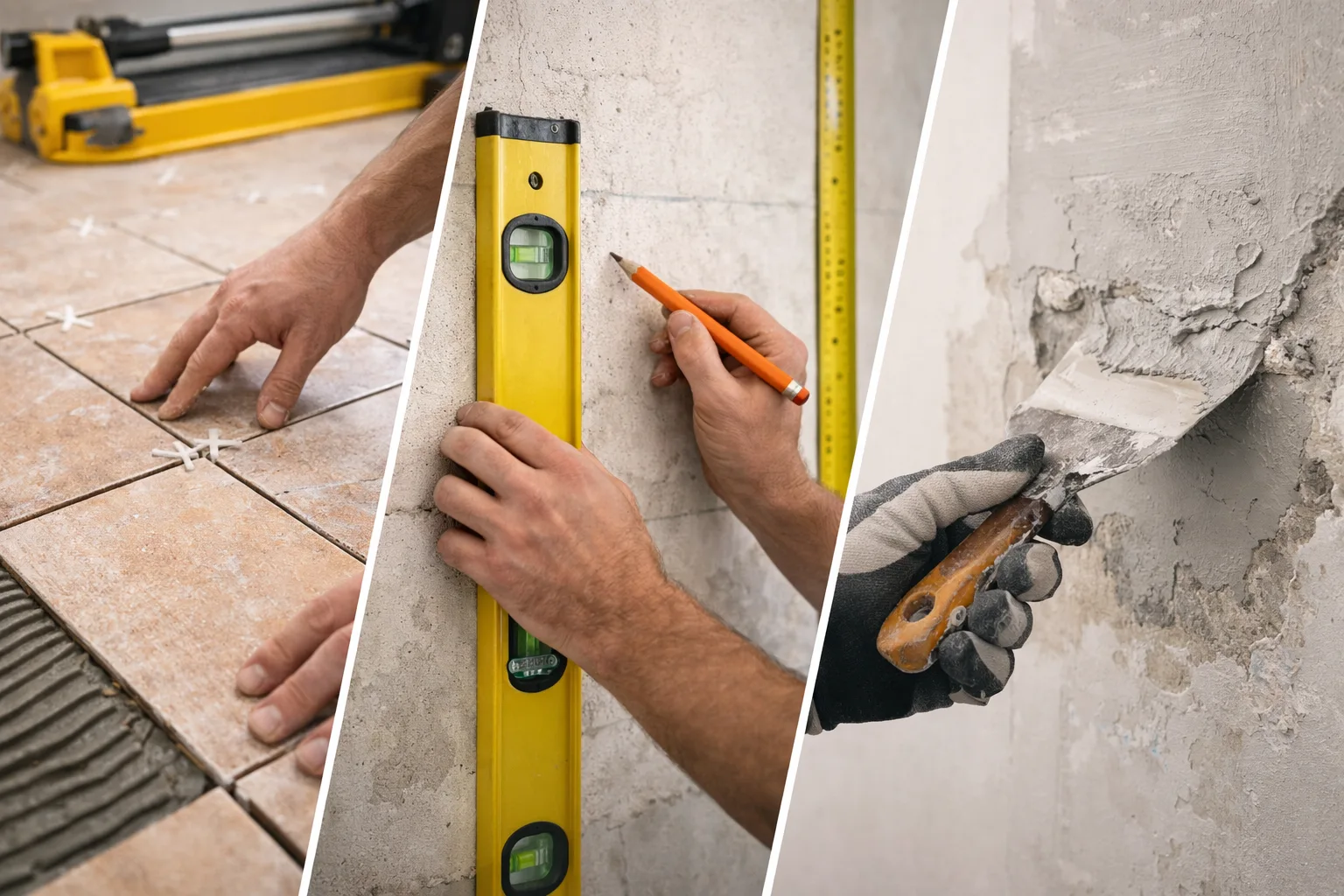
The safest savings usually come from prep, cleanup, and finishing work that does not touch core systems.
DIY Renovation Projects for Experienced Homeowners
Some projects are still DIY-friendly, but they need more accurate measuring, better tools, and more tolerance for mistakes. They can save money, but only if you are realistic about the time they take and the quality you can achieve.
Laminate or Click Flooring
These floors are workable for experienced DIYers because the system is designed to lock together without wet trades. The main risks are an uneven subfloor, poor expansion gaps, and bad cuts around doorways or cabinets.
Minor Drywall Repair
Patching small holes, dents, or nail pops is reasonable if you understand how to feather edges and sand between coats. The challenge is that repairs often look easy until the final coat goes on and every ridge becomes visible in daylight.
Basic Tiling in Dry Areas
Backsplash-style tile work in a low-risk, dry area can be manageable if you have time to set lines carefully and keep joints consistent. Poor alignment is the common failure point, not the actual sticking of the tile.
Simple Wall Panels and Ready-Made Cabinets
Installing panels or ready-made cabinets can work well when the wall is flat and the measurements are accurate. These projects are less forgiving than they look because a small error compounds across every adjacent piece.
Replacing Silicone Joints and Minor Cosmetic Repairs
Clean, dry, well-masked silicone work is a useful DIY skill for non-critical joints. It is also a good example of a task that looks easy but gets messy fast if the surface is dirty or the old sealant was not removed fully.
Renovation Tasks You Should Leave to Professionals
Some work should stay with professionals because the downside is too large. The issue is not only finish quality. It is also safety, code compliance, insurance, and the possibility of hidden damage that shows up later.
Electrical Panels and New Circuits
Any work that changes the electrical system can create fire and shock hazards if it is done wrong. If the job involves new circuits, panel changes, or concealed wiring, use a licensed electrician.
Gas Work
Gas systems are not a DIY experiment. Even a small leak can create severe risk, so any connection, relocation, or repair belongs to a qualified specialist.
Structural Changes and Load-Bearing Walls
A wall may look removable but still carry load or contain hidden services. If the project affects the structure, get a qualified professional involved before you open anything up.
Complex Plumbing and Moving Drains
Supply lines and drain lines can fail silently and then cause major damage behind finished surfaces. This is especially important when the sink or dishwasher moves from its original position.
Major Waterproofing and Wet Areas
Waterproofing failures are expensive because they often remain hidden until damage is widespread. That is why showers, critical wet zones, and other exposed assemblies should be handled by experienced trades.
HVAC, Roof Work, and Hazardous Materials
Heating, cooling, ventilation, asbestos removal, and roof work can involve licensing, permits, and serious safety exposure. These are not good places to test your skills for the first time.
How Much Can You Save With DIY Renovation?
DIY renovation can reduce labor costs, but it does not automatically reduce the final bill. Savings depend on how much work you can safely complete, whether you already own the tools, how much material waste you create, and whether the work needs to be redone later.
| DIY cost | Contractor cost | What changes the result |
|---|---|---|
| Materials, tools, protective gear, waste, time, possible rework | Labor, speed, experience, tools, accountability, warranty or callback support | Task complexity, finish quality, hidden damage, and whether you need to hire a pro to fix mistakes |
The savings are strongest when the task is repetitive, low-risk, and easy to inspect: painting, cleanup, or simple installation. They get weaker when the job requires expensive tools you will never use again, or when a bad result forces a contractor to undo your work. If you want a project baseline, compare your assumptions with the renovation cost calculator and the estimate renovation costs guide.
DIY Renovation Tools and Preparation
Good tools do not make you a pro, but the wrong tools can make a simple task harder than it needs to be. Before you start, gather the basics and make sure the room is ready.
- Measuring tools: tape measure, level, square, pencil, stud finder.
- Hand tools: screwdrivers, utility knife, pry bar, pliers, hammer.
- Paint and prep tools: roller, brushes, trays, drop cloths, sanding blocks.
- Protection: gloves, goggles, dust mask or respirator, hearing protection if needed.
- Cleanup: bins, contractor bags, labels, vacuum, rags, tape.
Preparation matters as much as the task itself. Protect finished surfaces, clear the room before you start, confirm material quantities, and give adhesives, paint, sealant, or filler enough curing time. A rushed project usually costs more than a careful one.
DIY Renovation Safety Checklist
- Turn off the relevant utilities before you begin.
- Check for hidden cables, pipes, and ducting before drilling or cutting.
- Use eye, hand, hearing, and respiratory protection when needed.
- Ventilate the workspace during painting, sanding, and adhesive work.
- Follow the manufacturer instructions for every material and tool.
- Keep children and pets away from the work zone.
- Stop immediately if you find mold, water damage, structural cracking, or hazardous materials.
- Dispose of renovation waste correctly and separate hazardous waste where required.
DIY or Hire a Contractor?
Use a simple decision test before you commit.
| Question | If yes | What to do |
|---|---|---|
| Is the work dangerous or regulated? | Yes | Hire a qualified professional. |
| Does it affect structure, water, gas, or electricity? | Yes | Treat it as pro-only work until verified otherwise. |
| Could a mistake damage other parts of the home? | Yes | Compare the cost of rework with professional labor. |
| Do you already have the right tools and similar experience? | No | Keep it simple or hire out the task. |
| Does the renovation schedule depend on a clean finish? | Yes | Use contractors for anything with low tolerance for error. |
If the answer points to hidden systems, high risk, or expensive consequences, hire a qualified professional. If the work is visible, reversible, and low risk, DIY may be the smarter choice.
How to Plan a DIY Renovation in the Right Order
- Define the project scope and separate DIY work from contractor work.
- Inspect the current condition and note hidden damage or utility locations.
- Confirm whether any work requires a permit, license, or specialist.
- Set the budget, tool list, and disposal plan before buying materials.
- Schedule demolition and technical work before finishes.
- Complete surface preparation and repairs.
- Finish painting, trim, flooring, and installation in the correct sequence.
- Inspect the result, fix defects, and clean the site.
A DIY project works best when it fits around contractor stages instead of fighting them. If you are still defining the order of work, the renovation planning checklist helps you avoid starting the wrong task too early.
Common DIY Renovation Mistakes
- Starting without a plan or sequence.
- Buying materials before final measurements are confirmed.
- Underestimating prep, cleanup, and curing time.
- Using the wrong tools for the task.
- Taking on electrical, plumbing, or structural work without experience.
- Failing to protect completed surfaces.
- Working in the wrong order and damaging finished areas.
- Ignoring waste removal and transport.
- Choosing savings over safety.
- Forgetting the cost of rework.
Frequently Asked Questions
What renovation work can I do myself?
Most homeowners can safely handle painting, wallpaper removal, surface prep, basic furniture assembly, simple hardware changes, and other cosmetic work that does not touch structure, gas, water, or major electrical systems.
What are the easiest DIY renovation projects?
Painting, wallpaper removal, replacing handles, and basic cleanup are usually the easiest DIY renovation projects because they are visible, low risk, and easy to stop if something unexpected appears.
Which renovation tasks should not be done yourself?
Major electrical work, gas systems, structural changes, complex plumbing, major waterproofing, HVAC, roof work, and hazardous material removal should stay with qualified professionals.
Is DIY renovation actually cheaper?
It can be cheaper for simple tasks where labor is the main cost, but savings disappear if you need expensive tools, waste materials, or a contractor to fix the result.
How do I know when to hire a contractor?
Hire a contractor when the work is dangerous, regulated, difficult to inspect, or expensive to redo. If a mistake could damage structure, water lines, gas lines, or electrical systems, it is not a beginner task.
Can I do demolition work myself?
Light non-structural demolition is often DIY-friendly, but you still need to check for hidden wiring, plumbing, and hazardous materials before you start. Once the work touches structure or concealed services, bring in a professional.
Should I do electrical or plumbing work myself?
Not if the work involves new circuits, concealed wiring, supply lines, drains, or anything that could create safety or code issues. Those jobs belong to qualified specialists.
How should I plan a DIY home renovation?
Start with scope, sort tasks by risk and difficulty, decide what you can safely do yourself, build the budget around materials, tools, transport, and likely rework, and keep contractor work scheduled before the finishing stages.
Plan Your DIY Renovation Realistically
DIY renovation works best when you choose the right tasks instead of trying to do everything. The best savings usually come from visible, low-risk work like prep, paint, cleanup, and simple installation. The most expensive mistakes usually happen when homeowners take on technical work that should have been left to professionals.
Re:Build helps you separate DIY work from contractor work, estimate materials and costs, and track the renovation in stages. Use it to plan the sequence before you start, so the project is safer, cleaner, and easier to keep on budget.