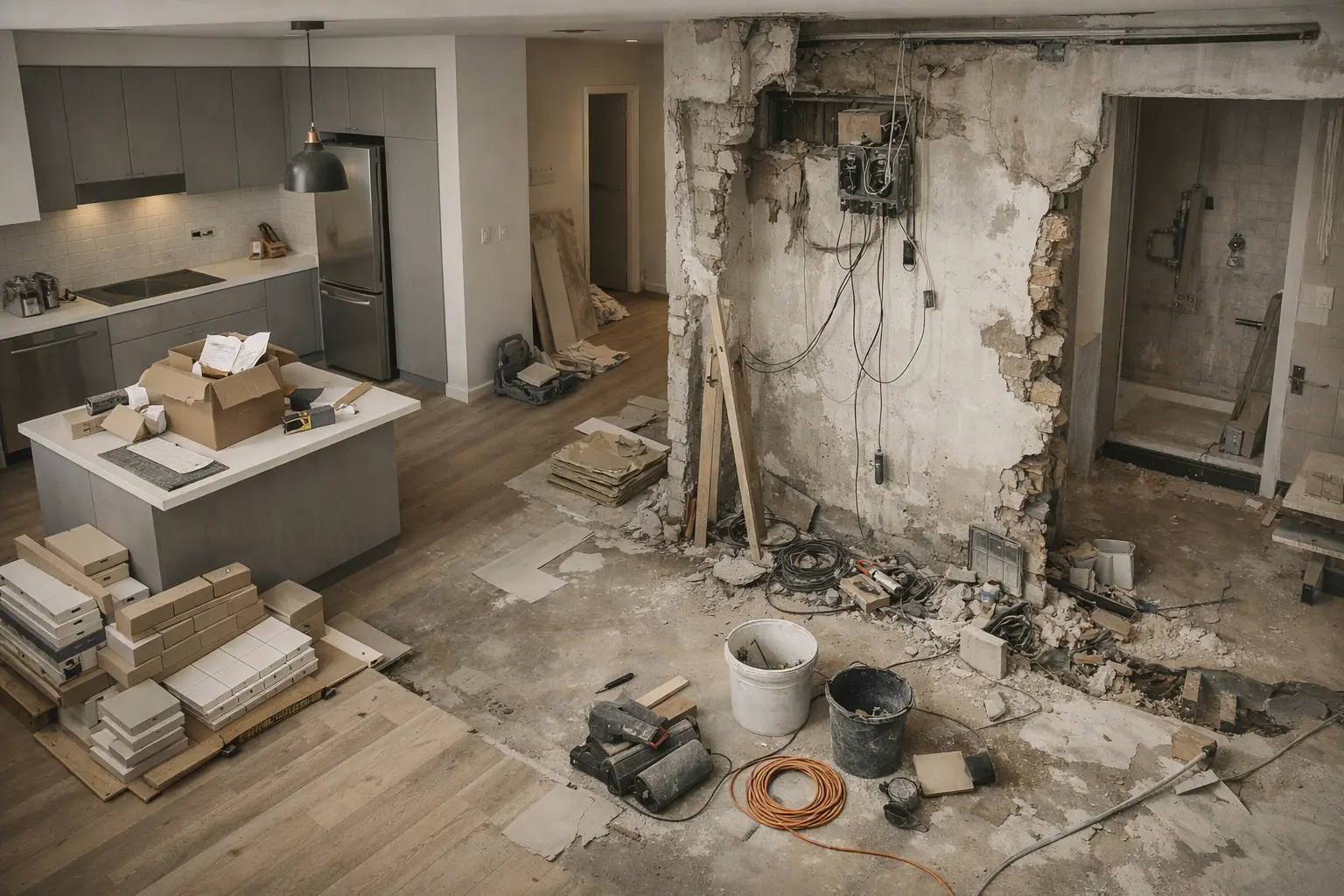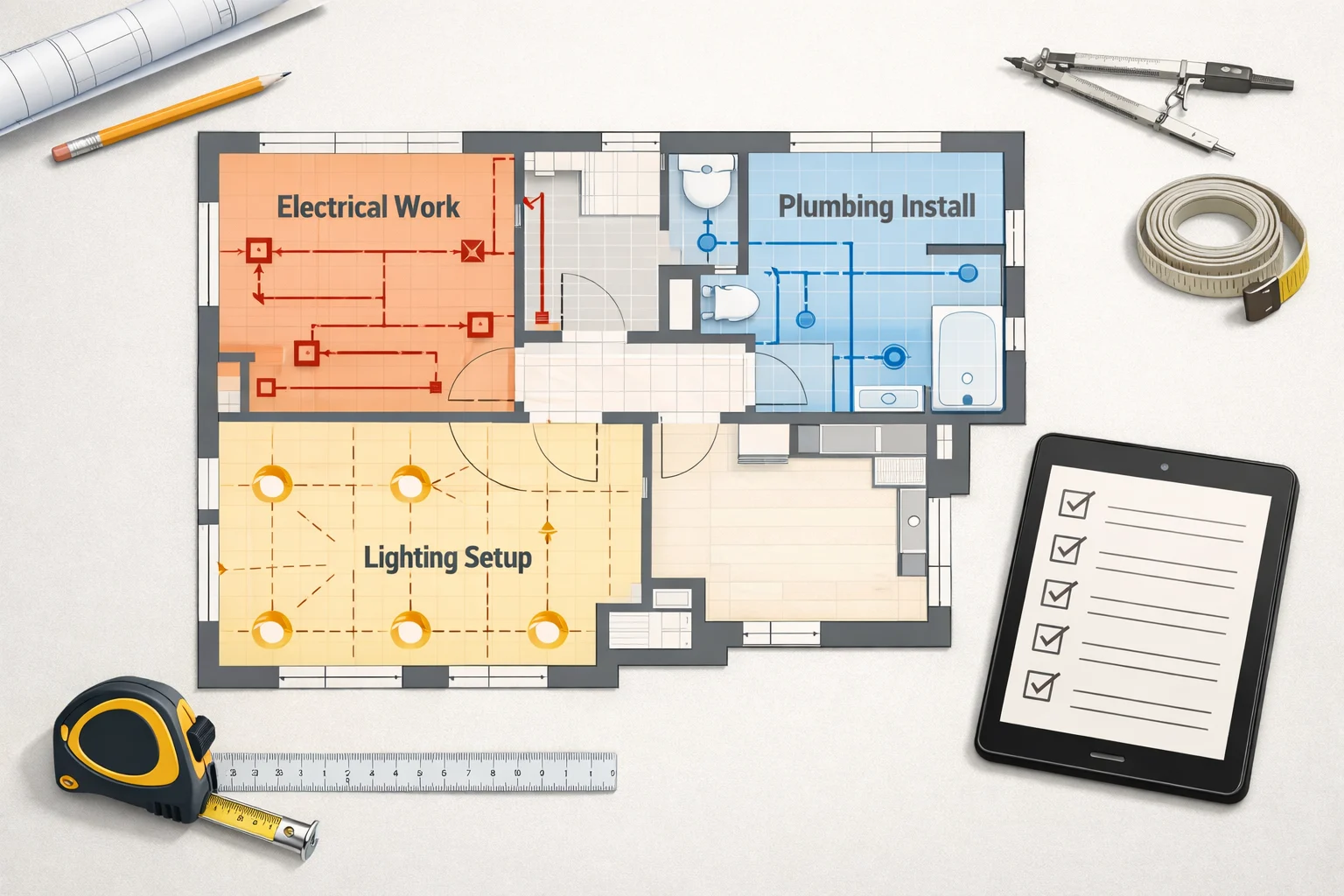
When you estimate renovation costs yourself, you get a clearer picture than a single contractor total can ever provide. A useful estimate separates scope, quantities, materials, labor, and contingency so you can compare quotes on equal terms.
That does not mean you skip contractors. It means you build a baseline first, so every later quote can be checked against the same assumptions.
For the broader sequence of decisions, start with our home renovation guide and keep a renovation planning checklist nearby as you define scope.
How to Estimate Renovation Costs
The most reliable way to estimate renovation costs is to break the project into stages and price each stage separately. A simple square-foot total is useful as a rough screen, but it is not enough for a real home renovation budget.
- Scope: define what is included and what is not.
- Quantities: measure rooms, surfaces, and installation points.
- Materials: estimate usage, waste, and package sizes.
- Labor: assign the likely pricing method for each trade.
- Extras: add delivery, disposal, rental, and contingency.
Step 1: Define the Renovation Scope
Start with a clean list of rooms and tasks. Write down what will be repaired, replaced, upgraded, or left alone. Also note existing-condition problems, like moisture damage, old wiring, or uneven floors, because those issues change the estimate quickly.
- Rooms and areas involved
- Renovation stages to be completed
- Tasks you may do yourself
- Tasks that require professionals
- Known problems that need correction
Step 2: Break the Project Into Stages
Put the project into logical stages so each cost bucket is easier to price and compare. This also makes it easier to spot missing work when you get contractor quotes later.
- Demolition and disposal
- Electrical work
- Plumbing
- Heating or HVAC where relevant
- Wall and ceiling preparation
- Waterproofing
- Tiling and flooring
- Painting and finishing
- Doors, fixtures, and final installation
- Cleanup and handoff
Step 3: Measure Rooms and Count Work Units
Once the scope is clear, measure the rooms and count the work units that drive cost. This is where the estimate becomes more accurate than a contractor-only total.
- Square footage or square metres for floors, walls, and ceilings
- Linear feet or metres for trim, edges, and runs
- Number of doors, outlets, and light points
- Number of plumbing fixtures and installation points
- Individual material quantities for each stage
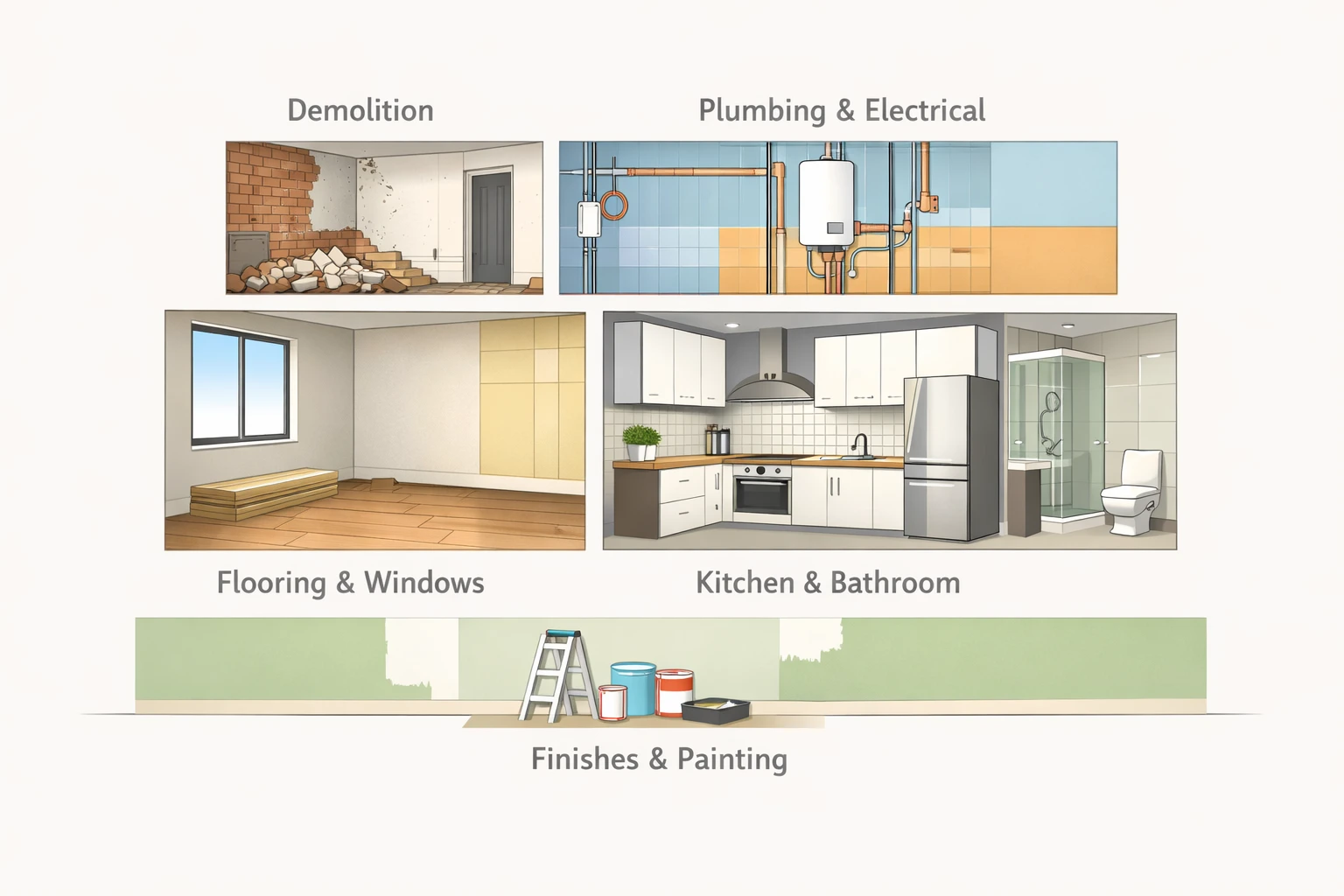
A stage-by-stage breakdown makes it easier to see where the budget actually goes.
Step 4: Estimate Material Quantities
For each stage, estimate the material quantity before you price it. Use coverage rates, package sizes, and a waste allowance so the estimate reflects real purchasing behavior rather than a perfect-world calculation.
- Coverage rates: paint, primer, waterproofing, and adhesive all have different yields.
- Waste allowance: add extra for cuts, breakage, and mistakes.
- Package sizes: price by the box, bucket, roll, or sheet where needed.
- Delivery and consumables: include small items like fasteners, tape, and protection materials.
- Material tiers: budget, mid-range, and premium materials can change the total quickly.
Step 5: Estimate Labor Costs
Labor is often priced by the hour, by day, by square foot, by installation point, by room, or by a fixed task. You do not need universal contractor rates to estimate it well; you need a consistent pricing method for each trade.
Separate labor by stage whenever possible so the estimate stays readable. That way you can compare a plumbing line item against another plumbing line item, not against a mixed total that includes half the job.
Step 6: Add Equipment, Delivery, and Waste Costs
Many estimates fail because they stop at materials and labor. A realistic renovation budget also includes delivery, equipment rental, waste disposal, permits where applicable, temporary accommodation, uncovered repairs, design or engineering help, and final cleaning.
These costs are often smaller than the main trade work, but they can still move the total enough to matter.
Step 7: Add a Contingency Budget
Every renovation needs a contingency because real projects uncover unknowns. Older homes, moisture issues, structural problems, or an unclear scope usually need a larger reserve than a straightforward cosmetic refresh.
There is no universal percentage that fits every project. The point is to protect the budget from surprises that appear after demolition starts.
Step 8: Compare the Estimate With Contractor Quotes
Once you have your own estimate, contractor quotes become easier to evaluate. You can compare totals with the same scope, spot missing work, flag unusually cheap or expensive items, and negotiate from a more informed position.
That is the real advantage of estimating first: you stop comparing one vague total against another. Instead, you compare scope against scope.
For a fuller planning workflow, the DIY renovation guide can help you decide which tasks belong in your own estimate and which should stay with a contractor.
Example Renovation Cost Breakdown
Here is a sample structure you can use to build a renovation cost estimate. The numbers below are placeholders for method, not universal market prices. Use it as a template for the way you organize the budget, not as a fixed price list.
- Demolition and disposal — room count or square footage, plus protection, hauling, and waste removal.
- Rough-in work — outlets, fixtures, and runs, plus wiring, pipe, fittings, permits, and access prep.
- Finishes — square footage and linear feet, plus tile, paint, flooring, trim, delivery, and touch-ups.
- Reserve — a contingency line for surprises, scope changes, or repairs found after demolition.
The exact split will vary by project. A kitchen, bath, or older home can shift the mix because plumbing, electrical work, and surface prep do not weigh the same in every renovation.
Common Renovation Estimating Mistakes
- Estimating only by total square footage
- Forgetting demolition and disposal
- Ignoring small installation items
- Using retail material price without waste
- Forgetting delivery and tool rental
- Comparing contractor quotes with different scopes
- Not separating labor and materials
- Using no contingency
- Assuming every room costs the same per square foot
Manual Estimate vs Digital Estimate Tool
The manual method helps you understand the assumptions behind the numbers. The digital estimate tool helps you organize stages, quantities, materials, and estimated costs faster, but it does not replace local contractor quotes for technical or high-risk work.
If you want a quicker first pass, you can also use Re:Build to estimate your renovation costs with a structured workflow.
Frequently Asked Questions
How do you estimate renovation costs?
Estimate renovation costs by defining scope, breaking the project into stages, measuring quantities, pricing materials and labor separately, and adding a contingency budget.
How do you calculate material costs for a renovation?
Measure the needed quantity, apply coverage rates and waste, then multiply by the cost per box, bucket, roll, or sheet. Include delivery and consumables.
How do you estimate labor costs?
Price labor by the method used in that trade, such as hourly, daily, per square foot, per installation point, per task, or per room.
How much contingency should you include?
There is no one-size-fits-all percentage, but older homes, moisture issues, or unclear scopes often need a larger reserve than simple updates.
Can you estimate renovation costs without a contractor?
Yes. A manual estimate is useful before you request quotes because it gives you a baseline and helps you compare scope on equal terms.
Why do contractor quotes vary so much?
Quotes vary because scope, materials, labor methods, schedule, and assumptions are often not identical. A detailed estimate makes those differences visible.
How accurate is a renovation estimate tool?
An estimate tool is useful for budgeting and planning if you enter realistic assumptions, but it still works best as a planning tool, not a substitute for a site-specific quote.
Conclusion
If you estimate renovation costs step by step, you get a budget that is easier to trust and easier to defend. That makes contractor quotes easier to compare and helps you avoid costly scope changes later in the project.
As a next step, you can compare your manual numbers with the Re:Build estimate tool.