A realistic bathroom renovation cost UK budget is often £5,000 to £9,000 for a standard full project, with smaller refreshes starting lower and premium bathrooms rising well above £10,000. The final price depends on the layout, labour, materials, plumbing, tile coverage and the amount of hidden work behind the walls.
Current UK cost guides from Checkatrade and MyBuilder point to a broad middle ground rather than one fixed average. In practice, the cost of bathroom renovation is shaped more by scope than by room size alone. If you keep the existing layout and choose standard fittings, the budget is easier to control. If you move plumbing, add bespoke joinery or rework the room structure, the total climbs quickly.
Use this guide as a planning range before you request written quotes. If you want a quick first pass, the bathroom renovation cost calculator can help you test your budget against the type of project you are considering.
Bathroom Renovation Cost Overview
These are planning estimates for a typical UK homeowner. Unless a row says otherwise, assume the ranges include labour and materials, but not every quote will handle VAT the same way, so always ask whether your price is VAT-inclusive.
| Project type | Typical UK range | What it usually includes | Layout changes? | Labour and materials? |
|---|---|---|---|---|
| Partial refurbishment | £1,500-£4,000 | Surface refresh, limited fixture replacement, light decorating | No | Usually yes |
| Small bathroom renovation | £2,000-£6,000 | Compact room, standard fittings, modest tiling, minimal changes | Usually no | Usually yes |
| Standard full renovation | £5,000-£9,000 | New suite, tiling, waterproofing, plumbing updates and finishing | Sometimes | Yes |
| High-end renovation | £10,000-£20,000+ | Premium tiles, bespoke storage, better fixtures and more complex labour | Often | Yes |
| Bathroom fitting labour only | £1,500-£3,000 | Fitter labour for a complete install, with specialist trades priced separately if needed | Depends | Labour only |
Average Bathroom Renovation Cost in the UK
There is no single average that fits every house, but many standard bathroom projects land around £4,500 to £7,000 and often include a new bath or shower, toilet, basin or vanity, wall and floor tiling, plastering, plumbing changes, decorating and a new extractor fan.
A typical family bathroom at this level usually keeps the room in roughly the same footprint. That keeps plumbing simpler and makes it easier to compare written quotes. Once you start changing the layout, the bathroom renovation price can move well beyond the average because the hidden work matters more than the visible finish.
Bathroom Renovation Cost Breakdown
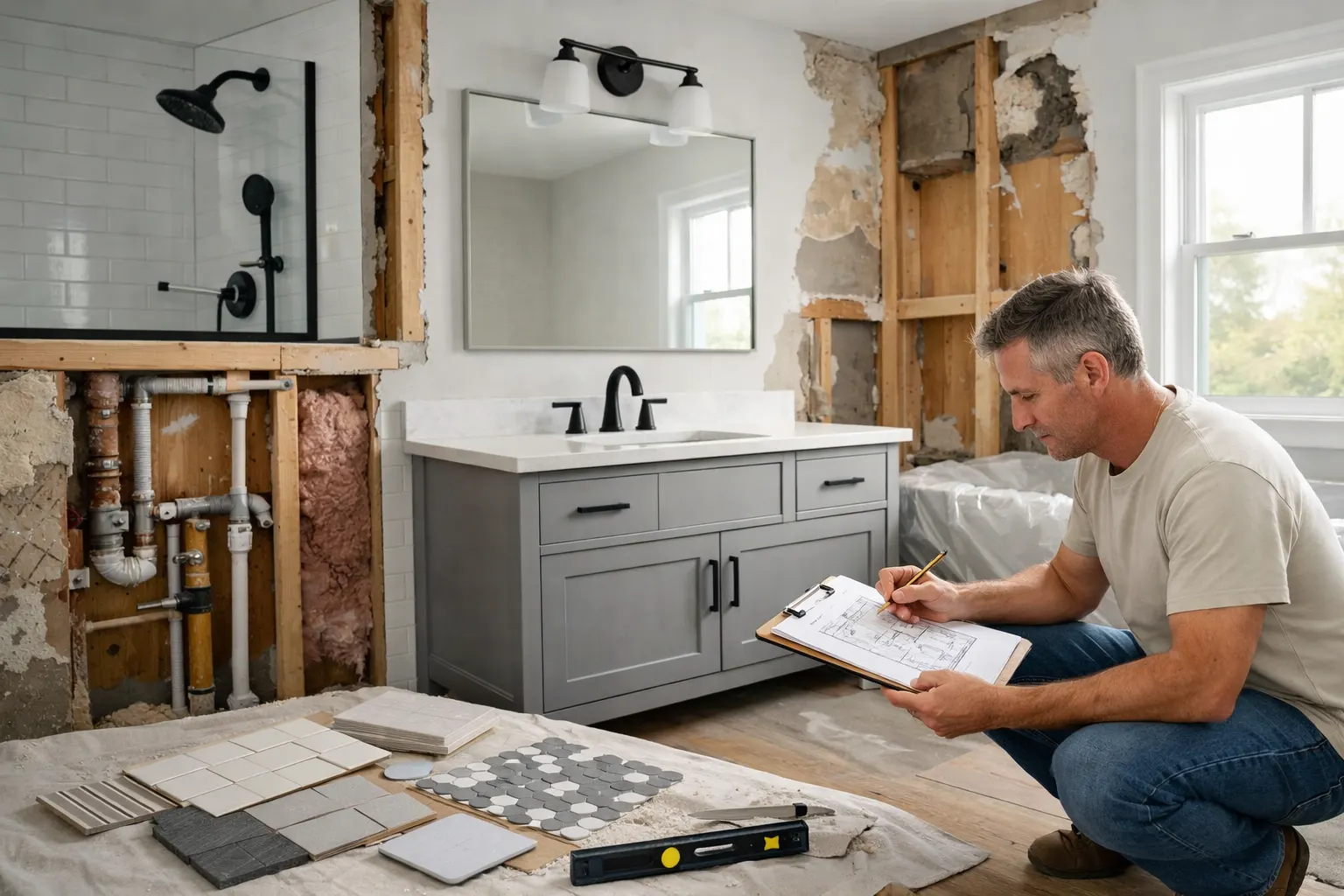
The biggest budget drivers are not always the items you see first. Demolition, making good the walls, waterproofing, waste removal and plumbing changes can take a large share of the total. That is why a bathroom renovation quote should always be itemised.
| Budget area | Indicative range | What affects the cost |
|---|---|---|
| Demolition and waste removal | £450-£1,300 | Strip-out size, skip hire, disposal fees, access and whether hidden repairs appear |
| Plumbing | £700-£2,000 | Whether you move pipework, replace valves or alter waste runs |
| Electrical work | £350-£1,000 | Lighting, sockets, extractor fan wiring and any shower or heated towel rail work |
| Waterproofing | £450-£1,200 | Wet-zone size, product system, substrate condition and shower type |
| Plastering and prep | £300-£900 | How much wall and ceiling making-good is needed after strip-out |
| Tiling | £800-£2,500 | Tile size, layout complexity, cutting, trims and full-height coverage |
| Sanitaryware | £500-£2,500 | Toilet, basin, vanity, waste fittings and finish level |
| Shower or bath | £300-£3,000 | Standard bath, walk-in shower, enclosure quality and plumbing changes |
| Vanity and storage | £250-£2,500 | Stock furniture, semi-custom units, custom joinery and worktop material |
| Taps and fixtures | £150-£700 | Tapware quality, waste fittings, towel hooks, mirrors and accessories |
| Ventilation | £150-£500 | Extractor fan quality, ducting length and electrical work needed |
| Decorating | £150-£500 | Painting, sealing, making good and minor final touch-ups |
| Labour and fitting | £1,500-£3,000 | Bathroom fitter labour, sequencing of trades and complexity of the install |
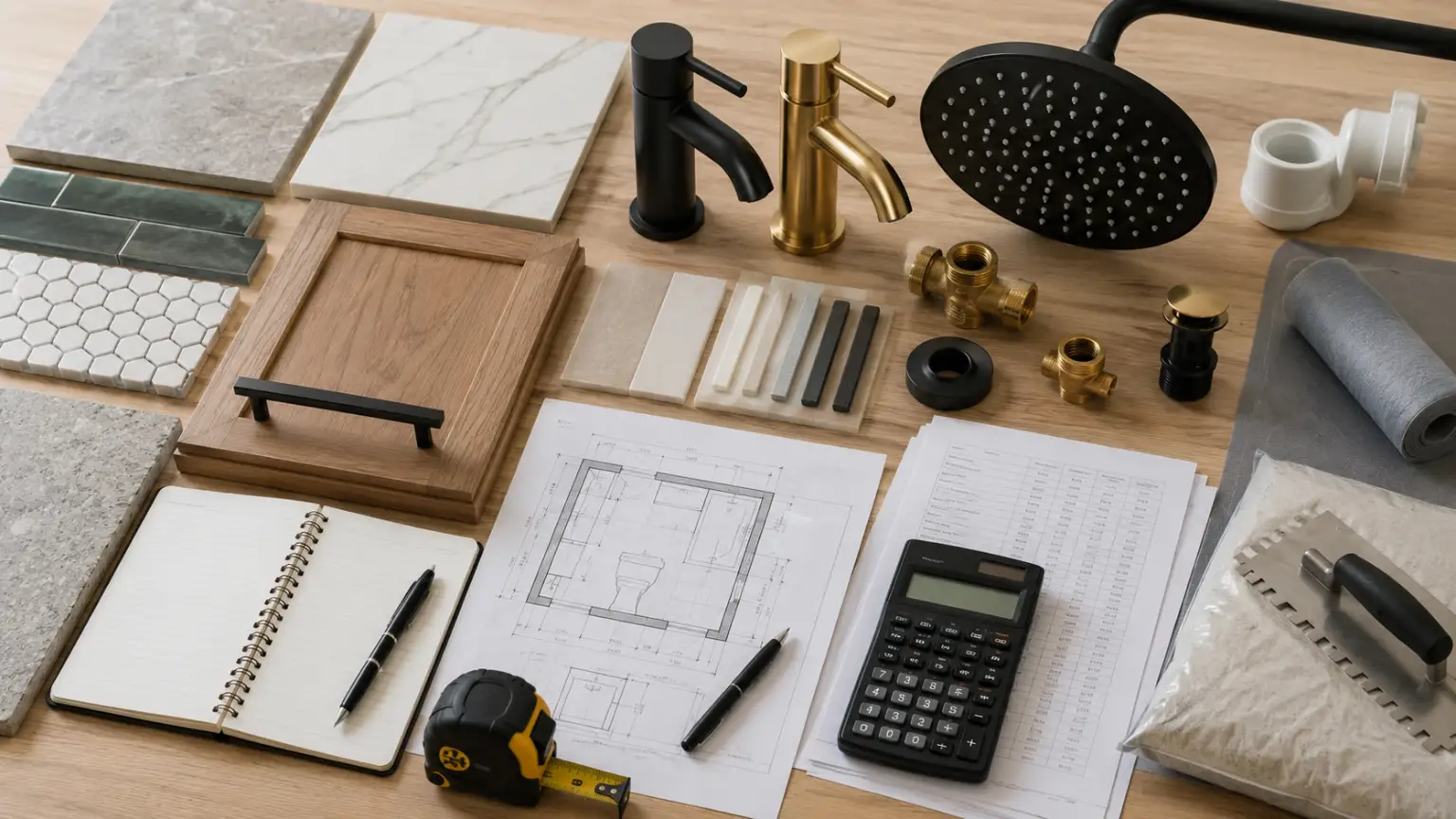
If you are comparing quotes, do not add every row in that table together as if each one is separate. A fitter may price labour, plumbing, tiling and making good in one package, while another may split those tasks out. The useful part is spotting what is and is not included.
Labour Costs and Bathroom Fitting Cost UK
Labour is a major share of the budget because bathroom work is a sequence of trades, not one simple task. In the UK, a bathroom fitter often charges around £320-£480 per day, while a full bathroom fitting project commonly runs to £1,500-£3,000 in labour alone.
Plumbers usually charge around £40-£60 per hour or about £350 per day, and electricians commonly sit around £45-£60 per hour or roughly £400 per day. Plasterers, tilers and decorators all add to the total depending on the room condition and finish level.
Costs are often higher in London and parts of the South East because labour rates, parking, congestion and access restrictions are less forgiving. Regional areas can be cheaper, but you should still compare itemised quotes rather than assuming a lower postcode automatically means a lower price.
Small Bathroom Renovation Cost UK
A small bathroom renovation cost UK budget often starts around £2,000-£4,500 for a basic refresh and can reach £6,000 or more once you add better tiles, a new shower enclosure, a wall-hung toilet or more extensive plumbing work.
A smaller room does not always cost proportionally less. The same trades still need to visit, the same waterproofing still needs to be done, and the same minimum labour charges can apply. In other words, the room is smaller, but the fixed project costs do not shrink at the same rate.
That is especially true for ensuites. They are compact, but they still need careful plumbing, ventilation, tiling and sanitaryware installation. A small ensuite can be excellent value if the layout stays put, but it can become expensive if you want a larger shower, bespoke storage or a hidden cistern.
What Affects the Final Price?
- Bathroom size: larger rooms need more materials, more labour and more time.
- Layout changes: moving the toilet, shower or basin increases plumbing and making-good costs.
- Property age: older homes often hide uneven floors, weak subfloors or old pipework.
- Product quality: premium sanitaryware, taps and tiles raise both supply and fit costs.
- Tiling scope: floor-to-ceiling tiling, large-format tiles and complicated cuts take longer to install.
- Access and logistics: upper floors, narrow stairs and limited parking can all add time and cost.
- Hidden damage: water leaks, mould and rotten subfloors can appear after strip out.
- VAT: check whether the quote is VAT-inclusive or VAT-exclusive.
- Project management: coordinating multiple trades can be charged separately or built into the fitter's price.
Budget, Mid-Range and Premium Examples
These examples are planning budgets, not quotes. They assume a normal domestic bathroom, standard UK labour rates and sensible product choices.
| Example budget | Approximate total | Assumptions |
|---|---|---|
| Budget refresh | £2,500-£4,500 | Keep the layout, replace a few fittings, repaint, light tiling and modest waste removal |
| Mid-range family bathroom | £5,500-£8,500 | New suite, full or near-full tiling, extractor fan, plastering, plumbing updates and labour |
| Premium bathroom | £12,000-£20,000+ | Layout changes, walk-in shower, better tiles, custom joinery, upgraded electrics and higher labour input |
A realistic quote should show where the money goes. If a builder gives you one lump sum without separating labour, materials, VAT, waste removal and any exclusions, ask for a proper breakdown before you sign.
How to Reduce Bathroom Renovation Costs
- Keep the existing layout if the room already works.
- Leave the soil pipe, waste runs and shower position where they are if possible.
- Choose standard-size sanitaryware and shower enclosures.
- Use premium tiles sparingly rather than tiling every surface in a luxury range.
- Finalise taps, sanitaryware and vanity choices before work starts.
- Compare itemised quotes from bathroom fitters, plumbers and tilers.
- Ask whether skip hire, waste removal and making good are included.
- Do not cut corners on waterproofing, ventilation or electrical safety.
If you want to compare a broader home project as well as the bathroom, keep the wider budget picture in mind before you commit to the bathroom alone.
Hidden and Commonly Overlooked Costs
Bathroom projects often look manageable until the strip-out begins. These are the costs that frequently get missed in the first budget draft.
- Skip hire: a builder's 6-8 yard skip often costs about £190-£450 per week, and permits can add roughly £15-£60 if the skip must sit on public land.
- Waste removal: stripping out the old suite and disposing of rubble is rarely free.
- Parking and access: tight streets, permit zones or upper-floor flats can add friction.
- Subfloor repairs: rotten boards or uneven floors often need work before the new finish goes down.
- Water damage: leaks may have spread further than the visible stain suggests.
- Ventilation upgrades: an extractor fan upgrade can be necessary even in a small room.
- Temporary bathroom arrangements: if the home only has one bathroom, the project can affect daily life in a real way.
- VAT: make sure you know whether the quote is VAT-inclusive.
- Making good: repainting, sealing and patch repairs are easy to forget.
Pre-Renovation Checklist
- Define the scope before asking for quotes.
- Keep or change the layout intentionally, not by accident.
- Measure the room and check tile quantities early.
- Decide on the bath, shower, toilet, basin and taps before work starts.
- Confirm whether quotes include labour, materials, skip hire and VAT.
- Set a contingency of 10% to 20%.
- Check whether the existing plaster, floor and pipework are in good condition.
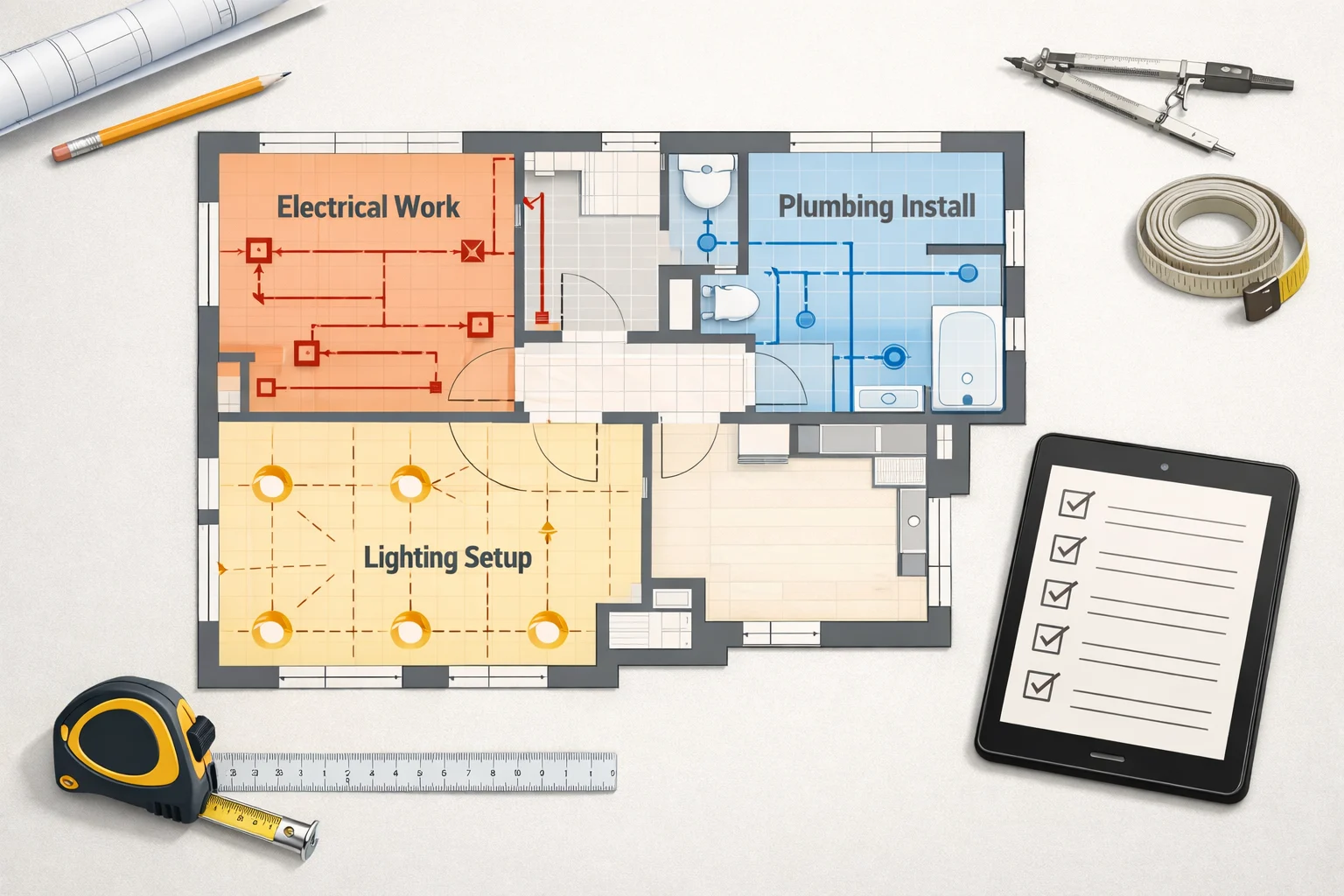
- Plan the order of work: strip-out, first fix, waterproofing, tiling, second fix and finishing.
- Book tradespeople in advance and agree payment stages in writing.
- Arrange temporary washing or bathroom use if the room will be out of action for several days.
For a wider planning framework, use your scope notes before any bathroom work starts.
How this estimate compares with written quotes
The most reliable bathroom renovation price is still a written quote based on the actual room. This guide is designed to help you spot unrealistic numbers and understand why one quote can be much higher than another even when the bathrooms look similar on paper.
If one quote looks too cheap, check whether it excludes demolition, waste removal, plumbing changes, tiling, making good or VAT. If one quote looks expensive, check whether it includes all the specialist trades, the right materials and a proper contingency for hidden work.
Frequently Asked Questions
How much does a bathroom renovation cost in the UK?
A standard UK bathroom renovation commonly lands around £5,000-£9,000, with smaller refreshes below that and premium projects often moving above £10,000.
What is the average bathroom renovation cost in the UK?
Many current UK guides point to roughly £4,500-£7,000 for a typical bathroom renovation, depending on the scope, labour rates and product quality.
How much does a small bathroom renovation cost?
A small bathroom renovation often starts around £2,000-£4,500 for a modest refresh and can rise to around £6,000 or more if you change the layout or choose better fixtures.
How much does bathroom fitting cost?
Bathroom fitting labour commonly runs from £1,500-£3,000 per project, while bathroom fitters often charge around £320-£480 per day.
How long does a bathroom renovation take?
A straightforward bathroom renovation often takes about 5-10 working days, but more complex work, drying time and product delays can extend that schedule.
Is it cheaper to renovate a bathroom without changing the layout?
Usually yes. Keeping the same layout often saves money because plumbing, drainage and floor work can stay simpler.
How much contingency should I include?
A contingency of 10% to 20% is a sensible planning buffer for most bathroom refurbishments, especially if the property is older or the room has not been opened up before.
Does a bathroom renovation price include VAT?
Not always. Ask every tradesperson whether the quote is VAT-inclusive or VAT-exclusive so you can compare like with like.
Conclusion
The cost of bathroom renovation in the UK becomes easier to control once you split the job into layout, labour, materials, fixtures, waste removal and contingency. That gives you a budget you can compare properly, rather than a vague number that is easy to underestimate.
If you want a bathroom-specific planning tool, test your own scope before you commit to fixtures and finishes.