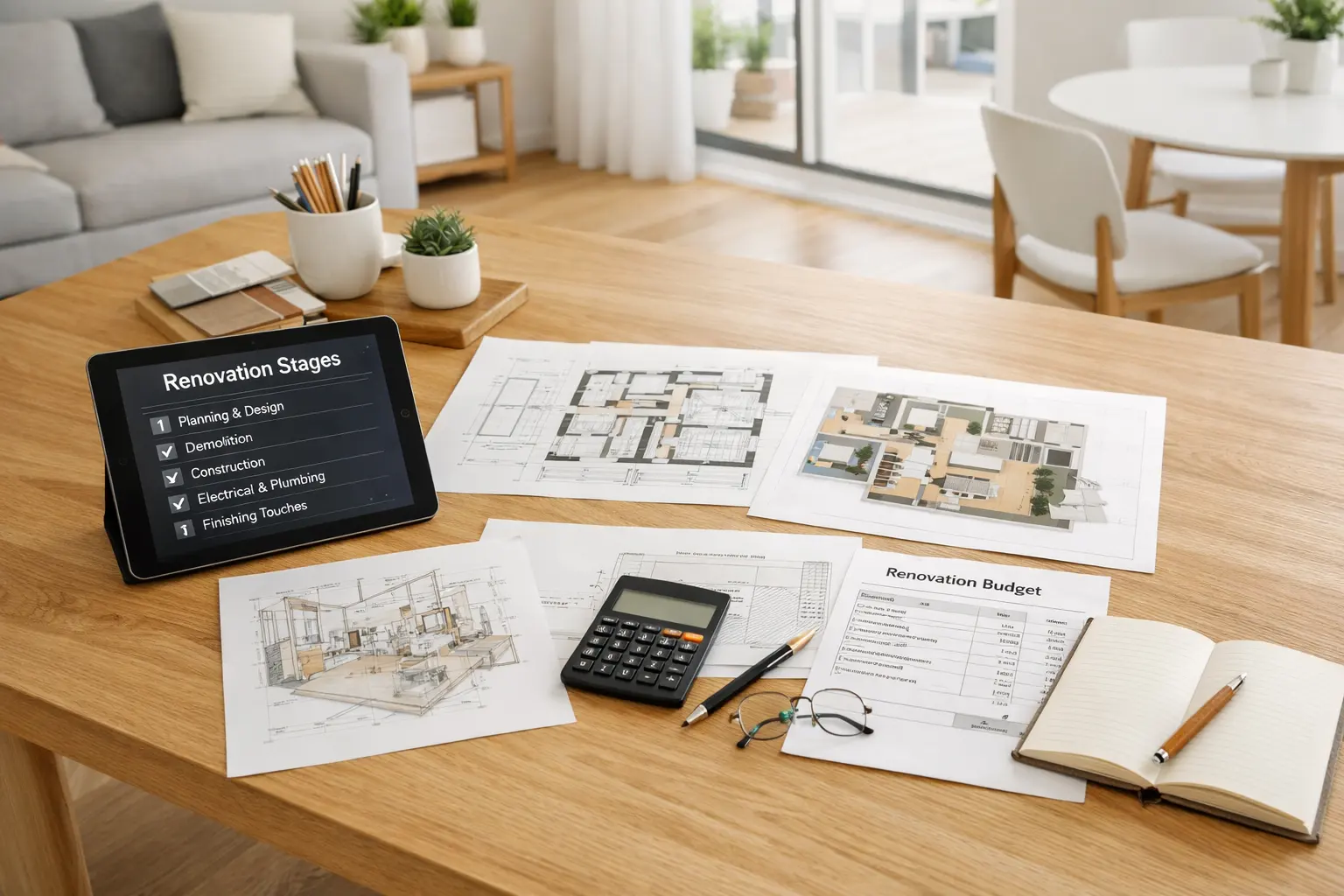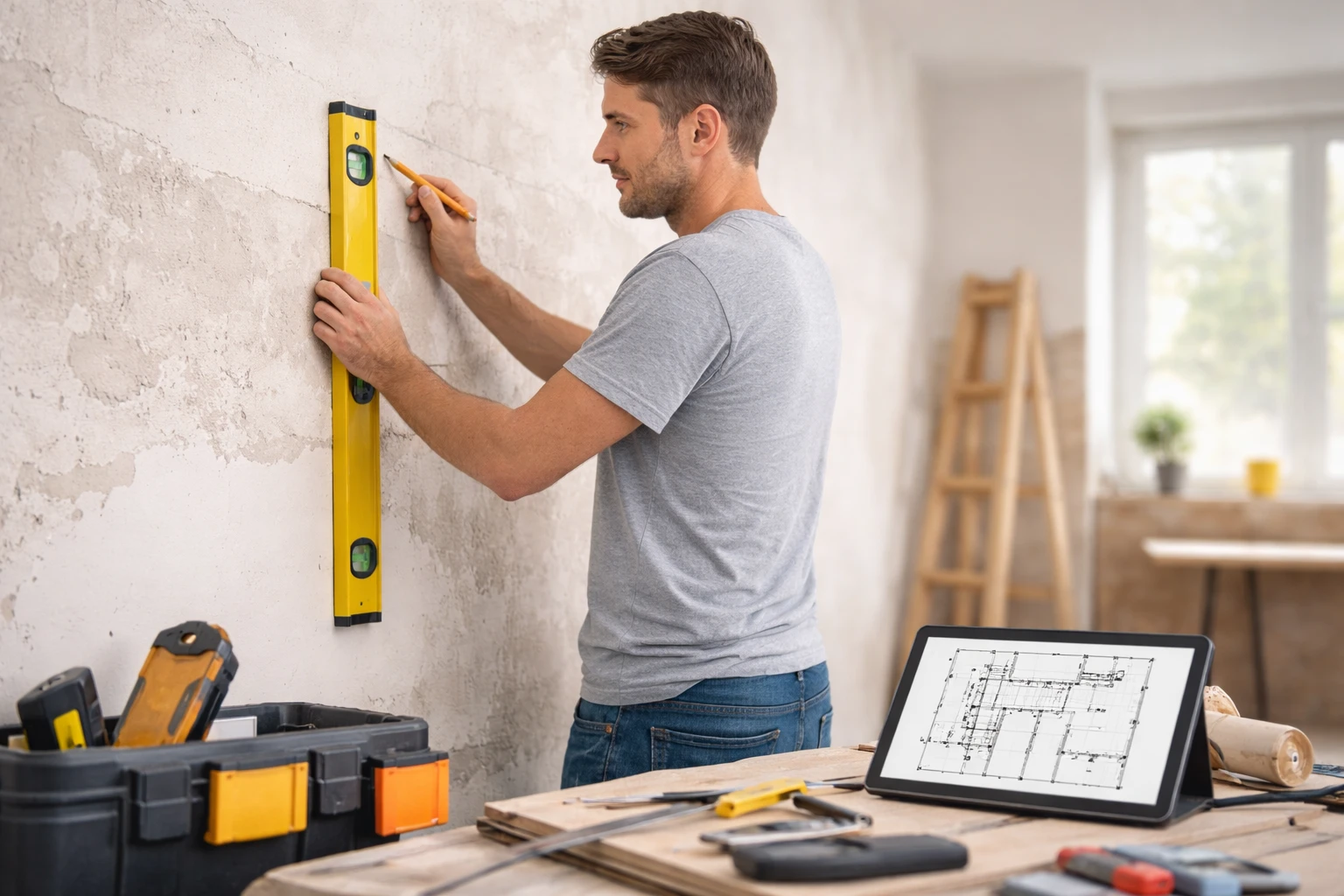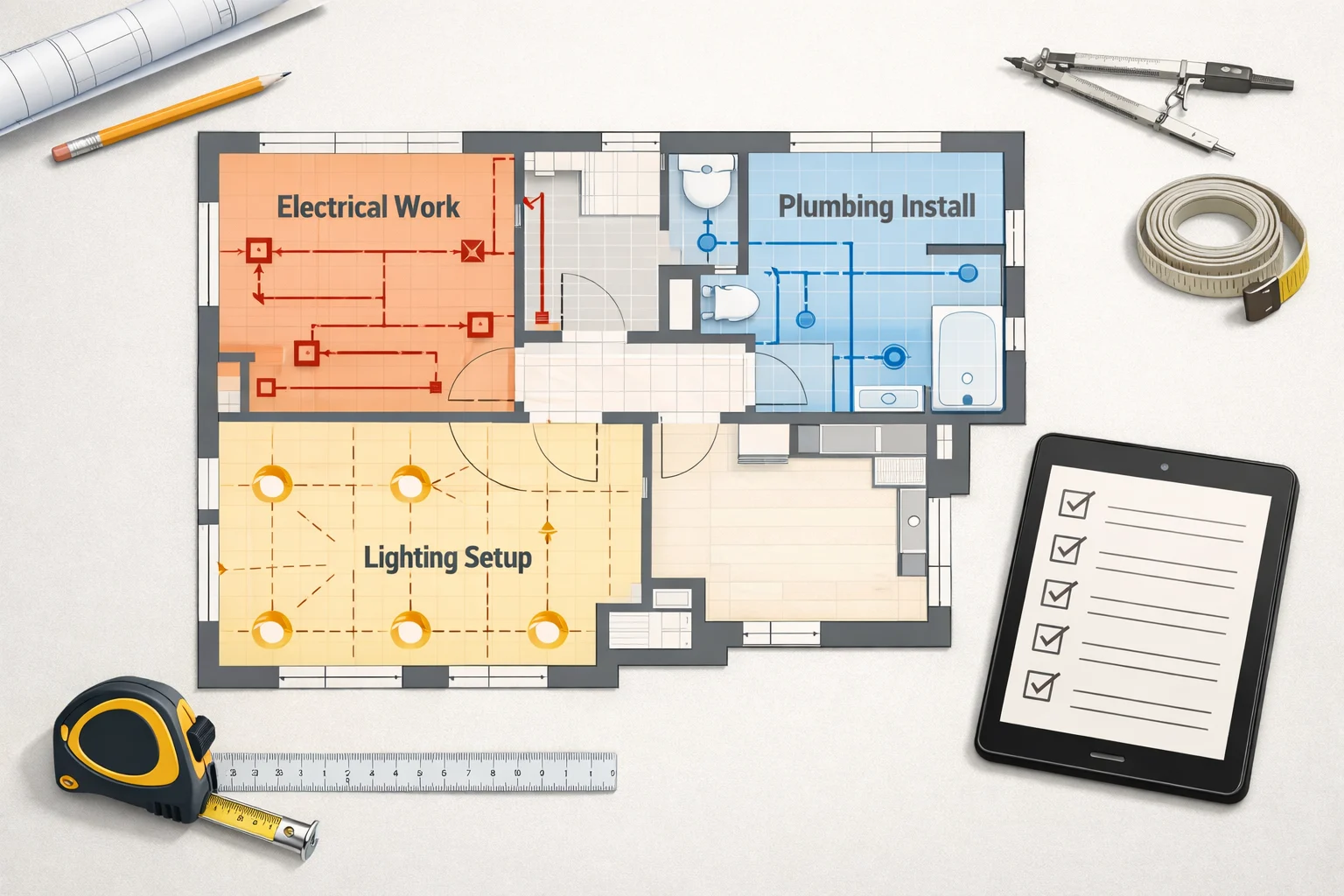
Home improvement projects make more sense when you compare them by cost, effort, impact, and disruption before you spend money. A paint refresh, a bathroom remodel, and a roof repair all improve a home, but they belong in very different parts of the schedule and budget.
This guide combines project ideas with a planning method. Use it to choose the right home improvement projects, rank them by priority, estimate cost and disruption, and decide what should happen first. If you are also sorting out the broader renovation sequence, keep the renovation planning checklist nearby and use the renovation cost calculator to compare options before you commit to a scope.
Home Improvement Projects at a Glance
The table below is a practical way to compare common projects by scale, disruption, and trade involvement. It is a planning tool, not a universal price list.
| Project | Typical scale | Relative cost | Difficulty | Disruption | Main benefit | DIY or contractor |
|---|---|---|---|---|---|---|
| Painting walls | Quick and low-cost | Low | Easy | Minimal | Fast visual refresh | DIY |
| Replacing lighting | Quick and low-cost | Low to Medium | Easy to Moderate | Minimal to Moderate | Better light and feel | DIY for simple fixtures; electrician for complex work |
| Installing storage | Quick and low-cost | Low to Medium | Easy to Moderate | Minimal | More usable space | DIY |
| Interior doors and hardware | Medium-scale | Medium | Moderate | Moderate | Better function and finish | DIY for simple swaps; contractor for tricky openings |
| Flooring improvement | Medium-scale | Medium | Moderate to Complex | Moderate to Major | Durability and comfort | DIY for some systems; contractor for larger jobs |
| Bathroom renovation | Major | High | Complex | Major | Daily comfort and value | Usually contractor-led |
| Kitchen renovation | Major | High | Complex | Major | Function and resale value | Usually contractor-led |
| Rewiring / plumbing / roof / layout changes | Major | High | Complex | Major | Safety and long-term reliability | Contractor or specialist |
Quick and Low-Cost Home Improvement Projects
Smaller projects are the easiest way to improve a home without committing to a major renovation. They usually have low cost, minimal disruption, and an immediate visible result.
Painting walls and trim
Painting changes the feel of a room without changing the layout. The main benefit is a fast visual refresh; the preparation is cleaning, patching, and masking; disruption is usually minimal. The most common mistake is rushing prep and seeing every flaw after the room dries.
Replacing light fixtures
Lighting updates can make a room feel larger, warmer, or more useful. The benefit is better light quality and a more current look. Preparation includes choosing the right fixture, confirming the wiring situation, and planning the installation. If the work is more than a simple fixture swap, use an electrician.
Updating handles, hardware, and storage
Replacing handles, shelf systems, and small organizers is an inexpensive way to improve function. The preparation is mainly measuring and matching the existing layout. A common mistake is choosing products that do not fit the openings or wall type.
Sealing gaps, updating trim, and minor surface repairs
Small repairs often have a bigger effect than people expect. Fresh caulk, cleaner trim, and patched dents make a room feel finished. These tasks need patience, a clean surface, and the right product for the material. The common mistake is painting before sealant cures or using the wrong filler.
Refreshing doors and frames
Refinishing doors, frames, or other visible parts can make an older room feel newer without opening the walls. The disruption is low, but it works best before larger floor or wall work so finished surfaces stay protected.
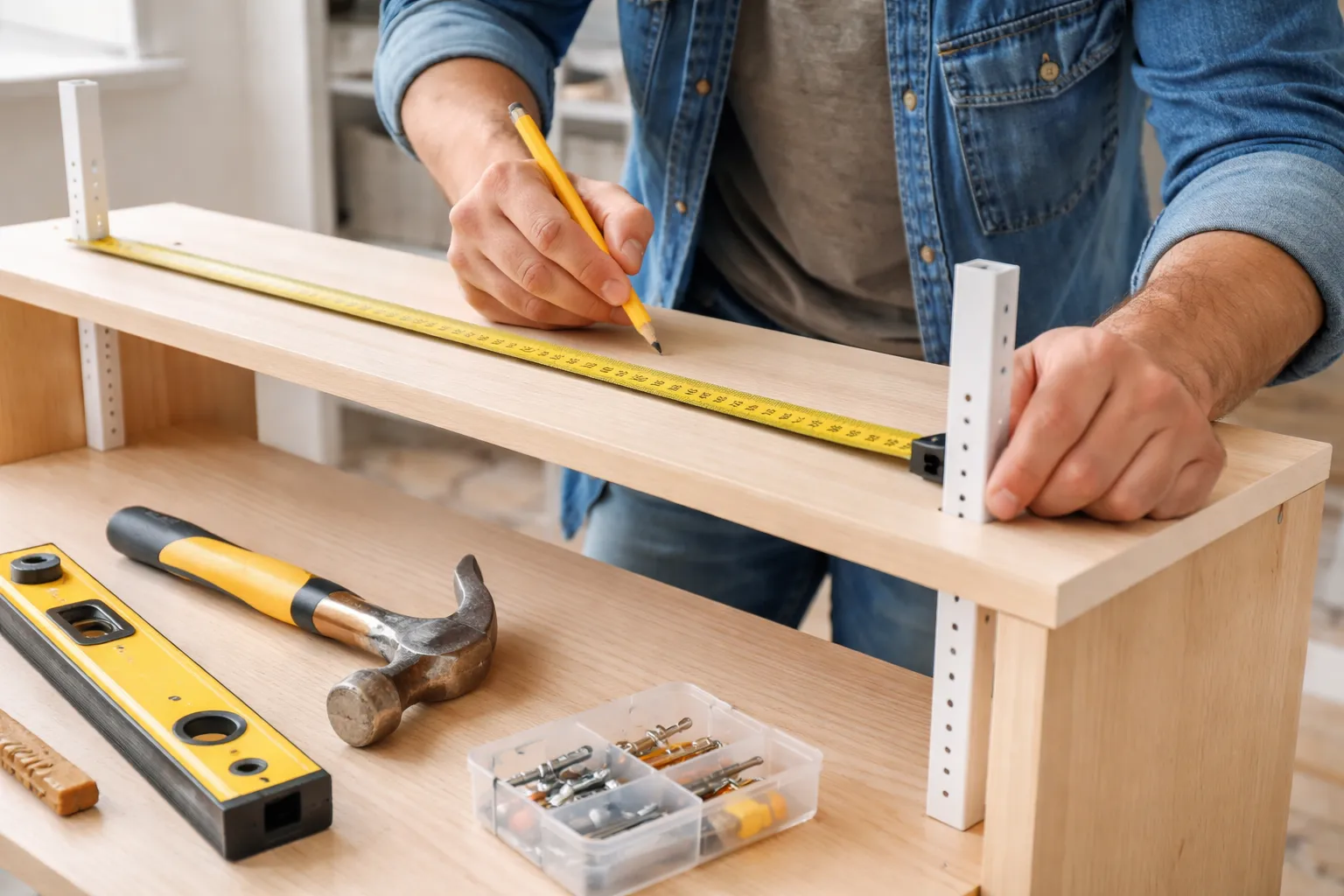
Small improvements work best when the scope is clear and the preparation is not rushed.
Medium-Scale Home Improvement Projects
Medium-scale projects improve both appearance and function. They usually require more scheduling and more coordination because they depend on the condition of the room and on how other trades will sequence their work.
Flooring replacement
Flooring can transform a room, but it also depends on the subfloor and on whether other messy work is already finished. The cost and effort are higher than a quick refresh, and the disruption can be moderate to major if the room has to be cleared. Use a contractor if the subfloor needs correction or if the project is large.
Interior doors and built-in storage
New doors and built-ins are useful when you want a cleaner layout or more storage. They take more measuring and more coordination than surface-level upgrades because clearances and adjacent finishes matter. A small measurement error can create alignment problems across the entire room.
Wall finishing and partial bathroom or kitchen updates
Wall finishing, partial bathroom updates, and kitchen cabinet or worktop changes sit between a refresh and a full remodel. A bathroom remodel guide shows how quickly a wet room becomes technical, while the kitchen remodel guide shows the same pressure around layout, storage, and utility locations.
Insulation, windows, and selected radiator upgrades
Energy-related projects can improve comfort and reduce waste, but they usually affect trim, walls, or finishing work downstream. These jobs are medium-scale because they often depend on the building envelope and the sequence of other work.
Compared with quick projects, medium-scale work typically brings more coordination, more materials, and more chances for delay between trades. That is why these projects should be planned as a sequence, not as isolated one-off tasks.
Major Home Improvement and Renovation Projects
Major projects affect several parts of the home at once and usually involve contractor coordination. They are more complicated because opening walls or replacing systems often reveals hidden-condition risks that were not visible before work began.
Full kitchen and bathroom renovations
Kitchen and bathroom remodels are major because they combine surfaces, fixtures, storage, and technical trades. The kitchen remodel guide shows how layout and workflow shape the room, while the bathroom remodel guide shows how quickly a wet area becomes a multi-trade project.
Rewiring, plumbing replacement, heating, and HVAC upgrades
System upgrades often need several specialists and a larger contingency because the real condition of the home only becomes obvious after the opening stage. These jobs also create more dependency on permits or inspections where applicable.
Window replacement, roof work, and layout changes
Window replacement, roof work, and layout changes affect weather protection, structure, and the final finishing schedule. These projects should be planned around the building itself rather than around the look you want at the end.
If you are comparing projects across rooms, the renovation cost calculator is a practical way to estimate the cost of your home improvement projects before you lock in the scope.
How to Choose the Right Home Improvement Projects
Choose a project by scoring it against the things that matter most: safety, existing damage, urgency, daily comfort, energy use, property value, maintenance risk, cost, disruption, dependencies, and expected lifespan.
- Must do now: safety issues, leaks, or damage that is getting worse.
- Should do soon: projects that protect the property or improve comfort and reliability.
- Nice to have: upgrades that improve appearance or convenience.
- Can wait: ideas that are lower priority, expensive, or dependent on other work.
A project that is cheap but causes major disruption may still rank lower than a more expensive one that solves a real problem for years. The point is to compare value, not just sticker price.
How to Prioritize Multiple Home Improvement Projects
When several projects compete for budget, sequence matters. A useful default order is:
- Safety and structural problems
- Water, moisture, roof, and drainage issues
- Electrical, plumbing, heating, and ventilation systems
- Insulation, windows, and energy-efficiency work
- Walls, ceilings, and floors
- Kitchens, bathrooms, and fixed furniture
- Cosmetic finishing and decor
This order is only a starting point, because every property is different. The goal is to solve what can damage the home first and leave the cosmetic work until the structure and systems are ready.
How to Estimate Cost, Time, and Disruption
Good estimates include more than the headline quote. Plan for materials, labor, delivery, equipment rental, waste disposal, design or engineering help where needed, temporary accommodation if a room becomes unusable, cleanup, delays between trades, and contingency.
| Project | Estimated cost range | Expected duration | Required trades | Dependencies | Contingency level |
|---|---|---|---|---|---|
| Painting / trim refresh | Low | Short | DIY or painter | Clean surfaces first | Low to Medium |
| Lighting upgrade | Low to Medium | Short to Medium | Electrician for complex work | Fixture choice and wiring | Medium |
| Flooring replacement | Medium | Medium | Installer or contractor | Subfloor readiness | Medium |
| Kitchen / bathroom remodel | High | Long | Multiple trades | Design, plumbing, surfaces | High |
| Rewiring / plumbing / roof / layout changes | High | Long | Specialist-led | Inspections and hidden conditions | High |
Use the table as a comparison tool rather than a prediction. If you do not have reliable local pricing yet, relative ranges are still enough to decide which project should move first. The renovation cost calculator helps you compare different project scopes before you commit to one path.
DIY or Hire a Contractor?
The decision depends on safety, licensing or local requirements, structural impact, utilities, skill, tools, finish quality, schedule, and the cost of rework. If a task touches electricity, gas, structure, or complex plumbing, the safe answer is usually contractor.
For task-by-task guidance, see our separate DIY renovation article. This guide stays focused on choosing and planning the project itself.
How to Plan Home Improvement Projects in the Right Order
Good sequencing prevents rework. The simplest rule is to finish hidden and disruptive work before closing walls or installing sensitive finishes.
- Fix leaks before painting.
- Complete electrical and plumbing work before closing walls.
- Replace windows before final wall finishing where practical.
- Finish wet trades before sensitive flooring.
- Install fixed furniture after walls and floors are ready.
- Complete cosmetic work last.
That order is not identical for every property, but it keeps the most damaging tasks from being done twice. If your renovation spans several rooms, the home renovation guide can help you see how the broader sequence fits together.
Common Home Improvement Planning Mistakes
- Choosing cosmetic work before urgent repairs.
- Starting without a full project list.
- Underestimating dependencies between tasks.
- Comparing only total cost and ignoring disruption.
- Forgetting contingency.
- Scheduling trades in the wrong order.
- Buying finishes too early.
- Planning too many projects at once.
- Treating every improvement as a DIY task.
- Failing to measure before ordering.
Frequently Asked Questions
What are the best home improvement projects to start with?
Start with low-risk projects that improve how the home feels every day, such as painting, better lighting, storage, and minor repairs.
How do I prioritize home improvement projects?
Start with safety and structural issues, then move to water, roof, electrical, plumbing, heating, and ventilation problems. After that, handle insulation, windows, room upgrades, and finishing.
Which home improvements should be done first?
Fix leaks and active damage first. Any work that protects the structure or prevents a larger repair should come before cosmetic updates.
How do I estimate the cost of a home improvement project?
Estimate materials, labor, delivery, equipment rental, waste disposal, and a contingency for delays or rework. The renovation cost calculator is the quickest way to compare options.
Should I complete several home improvement projects at once?
Only if they share the same sequence and do not create rework. Bundling unrelated projects can make the schedule harder to control and increase disruption.
Which projects require a contractor?
Electrical, gas, structural, roof, and complex plumbing work usually require a contractor or specialist because the risk, inspection burden, and rework cost are too high.
How much contingency should I add?
Add a reserve for hidden damage, price changes, waste, and small corrections. Older homes and projects with more demolition need a larger reserve.
How do I plan projects in the correct order?
Work from hidden systems outward: leaks and utilities first, then walls and floors, then cabinets and fixtures, and cosmetic work last.
Re:Build helps you organize home improvement projects by stage, compare priorities, estimate costs, separate DIY and contractor work, and keep materials and progress in one place.