
This kitchen remodeling guide focuses on the decisions that shape cost, layout and usability before you buy cabinets or choose finishes. A good remodel is not just about a nicer look. It involves the room layout, plumbing, electrical work, lighting, materials, budget, timeline and installation order.
The early choices matter because they affect both cost and how the kitchen works every day. If you move appliances, add an island or shift plumbing, the plan gets more complex. If you keep the layout simple, the project is usually easier to price and build. This guide is meant to help you plan the work in the right order before orders and trade calls begin.
Kitchen Remodeling Guide at a Glance
- Define your renovation goals.
- Assess the existing kitchen.
- Set the project scope.
- Plan the layout and workflow.
- Establish a realistic budget.
- Confirm plumbing and electrical needs.
- Choose cabinets, worktops, flooring and finishes.
- Select appliances and lighting.
- Build a realistic timeline.
- Order long-lead materials.
- Decide what requires professional work.
- Review the completed kitchen before final payment.
Start With Your Goals and Project Scope
Before you compare bids or pick materials, decide what this remodel is meant to do. A full remodel replaces most or all of the kitchen, while a partial update may keep the layout and reuse some of the existing structure. That distinction changes the budget, schedule and level of disruption.
Write the project into three buckets:
- Must-have work: repairs, worn-out items and anything that limits safety or daily use.
- Useful upgrades: better storage, better lighting, more durable finishes and improved workflow.
- Optional finishes: decorative upgrades that can be delayed if the budget gets tight.
That simple split keeps the project focused. It also makes it easier to decide what should be done now and what can wait for a later phase.
Assess the Existing Kitchen
A realistic plan starts with what is already there. Check cabinet condition, worktop wear, plumbing locations, electrical capacity, outlet placement, ventilation, lighting, flooring, wall condition and any signs of moisture. Measure the appliance openings too. A fridge or range that is even slightly oversized can force a redesign.
Keeping the current plumbing and appliance locations can reduce complexity, but it should not block a better layout. If a different arrangement solves a workflow problem or improves storage, it may be worth the extra work. The point is to make the change intentionally, not accidentally.
Plan the Kitchen Layout and Workflow
The kitchen work triangle is still useful as a guideline, but it should not override real-world needs. Think in zones: prep, cooking, clean-up, storage and landing space. The best kitchen remodel layout is the one that fits how the household cooks, stores groceries and moves through the room.
Pay attention to aisle widths, appliance door clearance, counter workspace and seating circulation. A kitchen can look polished and still feel awkward if a dishwasher blocks a walkway or a refrigerator door hits the island. Good layout work usually saves more money than a last-minute cosmetic change ever could.
Before you commit to finishes, AI interior design from a photo can help you compare cabinet colors, material contrast, and overall styles using your existing kitchen as the visual starting point. Use the result as a concept, then confirm the layout and every measurement separately.
Set a Realistic Kitchen Remodel Budget
A kitchen remodel budget should cover more than the visible finishes. The major categories usually include cabinets, worktops, appliances, plumbing, electrical work, lighting, flooring, wall finishes, demolition, waste removal, delivery, installation labor and contingency.
For a more structured estimate, use the kitchen remodel cost calculator. If you want a kitchen-specific budget breakdown, see how much a kitchen renovation costs. If you want a broader planning method, see how to estimate renovation costs without a contractor. If you are comparing renovation priorities across rooms, our Home Improvement Projects article can help too.
For a wider project view, our home renovation guide covers the planning sequence that sits around a kitchen remodel.
In practice, cabinets and labor usually take the largest share of the budget. Appliances and worktops can also move the total quickly, especially if the project includes custom cabinetry or premium finishes. The safest approach is to decide the scope first, then price the pieces against that scope.
When you review bids, check whether the estimate includes demolition, disposal, delivery, installation, trim, hardware, touch-up work and cleanup. Some quotes look lower only because they leave out items that still have to be paid for later. A clear written scope is more useful than a short headline number.
It also helps to separate your budget into fixed costs and choice-driven costs. Fixed costs are the items that almost always have to happen, such as demolition, rough-in work, installation and cleanup. Choice-driven costs are the parts you can shape through material selection, cabinet construction, worktop finish, appliance level and lighting style. That distinction makes it easier to protect the core budget while still leaving room for the finishes you care about most.
Understand the Main Cost Categories
Each major category can widen the budget in a different way. Cabinets drive cost through size, finish and construction quality. Worktops vary by material, thickness and fabrication. Appliances add cost through size, built-in requirements and delivery. Labor rises when the project includes plumbing changes, electrical upgrades or detailed cabinet installation.
Allowances deserve attention too. If a quote leaves too much to “allowance” amounts, the final bill can climb after selections are made. That is especially true for hardware, backsplash tile, lighting fixtures and appliance hookups. A better bid states what is included, what is excluded and which decisions still need to be finalized.
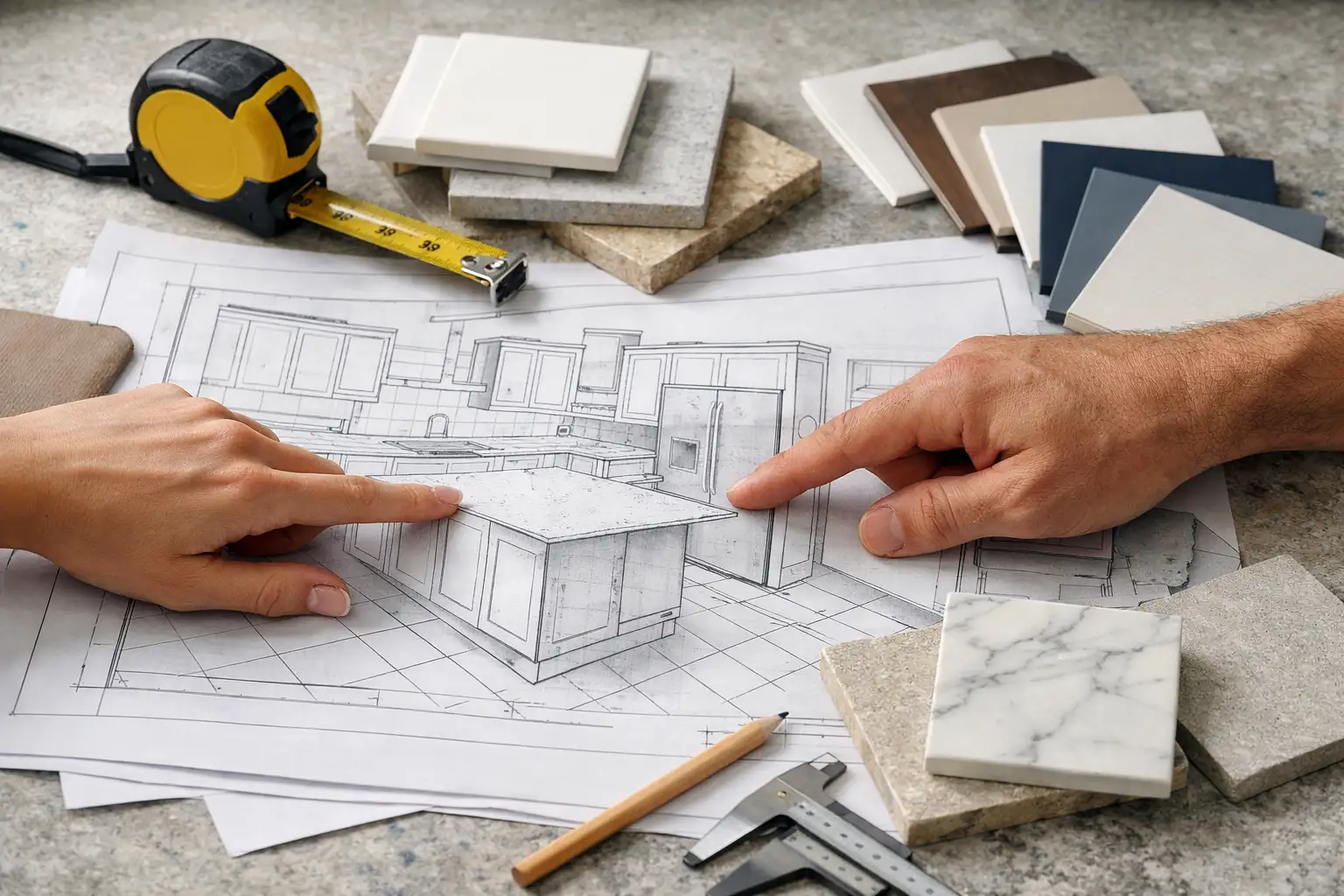
Confirm scope and materials before demolition so you are not buying under pressure.
Plan Plumbing, Electrical Work, Ventilation, and Lighting
Coordinate the technical work before cabinets and finishes are ordered. Sink and dishwasher connections, appliance circuits, outlet placement, task lighting and ventilation all need to be considered early. If the room needs a new hood, new circuits or outlet changes, those decisions should be locked in before the surfaces are closed.
Use qualified professionals for plumbing, electrical and gas work, and test the critical systems before the walls are closed. Fixing a missed connection after cabinets are installed is far more expensive than catching it during rough-in.
Choose Cabinets and Storage
Cabinet layout affects storage, workflow and how easily the kitchen can be used. Drawers are often better for daily items, while shelves can work for larger cookware or rarely used items. Corner storage, tall units, pantry space and trash or recycling storage should all be planned before you order anything.
Custom cabinetry can solve tricky dimensions, but it also leaves less room for error. Standard cabinets are often simpler to budget and replace later. Either way, measurements must account for door swings, toe kicks, appliance gaps and access to plumbing and utilities.
Compare Worktop Materials
Worktops should be chosen for the way the kitchen is used, not just the way they look. Consider durability, moisture resistance, heat resistance, staining, repairability and total installed cost. Quartz, granite, laminate and wood all behave differently, and the best option is usually the one that fits the household’s habits and maintenance tolerance.
Fabrication details matter too. Sink cutouts, edge profiles, seams and overhangs can change the final cost, especially on larger islands or unusual layouts.
Select Flooring and Wall Finishes
Kitchen floors must handle traffic, cleaning and occasional spills. Wall finishes near the sink, range and prep areas should be selected with maintenance in mind. If underfloor heating is part of the project, it should be planned before the floor structure is finalized.
Transitions to adjacent rooms also matter. A floor that works beautifully in the kitchen can still look unfinished if the threshold or wall protection is ignored.
Choose Appliances Early
Appliances should be selected before the cabinet order is finalized. Exact dimensions, ventilation requirements, door clearance, connection points and energy needs all influence the plan. Integrated appliances need even more coordination because the cabinet design has to fit them precisely.
Delaying appliance decisions is one of the fastest ways to create avoidable redesign work. A cabinet opening that is wrong by even a small amount can affect the whole installation sequence.
Build a Realistic Kitchen Remodel Timeline
A kitchen renovation timeline usually includes design decisions, measurements, quotes, material ordering, cabinet manufacturing, demolition, technical work, surface prep, cabinet installation, worktop templating and installation, appliance delivery, final connections and cleaning.
Lead times can shape the whole project. Cabinets and worktops are common bottlenecks. A temporary kitchen arrangement helps reduce disruption while you wait for orders or finish the work. A good kitchen renovation timeline is not about speed alone; it is about avoiding idle time between trades.
That timeline also needs to account for measurement appointments, cabinet manufacturing, countertop templating and any revisions that happen after the room is opened up. If the kitchen is being used as part of a larger renovation, coordinate the kitchen schedule with the rest of the home so trades do not keep waiting on one another.
On a real project, the sequence matters as much as the calendar. Plumbing and electrical rough-in work should happen before surfaces are closed. Cabinets usually go in before the worktops are templated. Appliances are typically set after the main boxes are installed, but before the final sign-off. If one trade is delayed, the rest of the schedule can slip, which is why a kitchen remodel plan should include a little buffer time between critical steps.
Decide What to DIY and What to Leave to Professionals
Kitchen remodels involve water, electricity, ventilation and heavy finishes. Knowing what to do yourself and what to leave to a pro is a cost-control decision, but also a safety decision.
Hire a pro for: electrical systems, plumbing, gas, ventilation, structural changes, worktop templating and complex cabinet installation.
Consider DIY for: clearing the room, simple removal work where safe, painting, hardware changes and final styling. If a task affects services, structure or waterproofing, keep it with the trade that does it every day.
If you want a broader breakdown of safe tasks, the DIY renovation article is a useful companion.
If you are comparing project types before you commit, our bathroom remodel guide shows how another major room remodel is planned, and our renovation planning checklist can help you keep the pre-work organized.
Common Kitchen Remodeling Mistakes
- Choosing finishes before the layout is final.
- Ordering cabinets before appliance sizes are confirmed.
- Not leaving enough counter space for prep work.
- Ignoring lighting until the end.
- Forgetting outlet locations and charging needs.
- Overlooking ventilation.
- Buying materials without confirming lead times.
- Comparing bids with different scopes.
- Selecting materials only because they look good in a sample.
- Changing decisions after orders are placed.
- Forgetting delivery and waste removal costs.
- Skipping contingency.
- Paying the final amount before the work is checked.
Final Inspection Before Handover
Before final payment, walk the kitchen slowly and check the details. Look at cabinet alignment, door and drawer movement, worktop joints, sealant, sink and tap leaks, drainage, appliance operation, outlets, lighting, extractor performance, floor and wall finishes, scratches, chips and missing parts.
Write down anything that needs correction. Keep the list short, specific and tied to a deadline. Do not release the final payment until the agreed punch-list items are addressed and the paperwork is in hand. Keep copies of product manuals, warranty documents, finish schedules and any sign-off notes so you do not have to reconstruct the project later if a service issue appears.
If the contractor gives you a closeout packet, keep it together with paint codes, product model numbers and any leftover tile or trim. Those small details can save time if something needs to be replaced later. They also make it easier to match finishes if you ever repair one cabinet door, replace a faucet cartridge or patch a wall after the project is done.
Frequently Asked Questions
How do I start planning a kitchen remodel?
Start with your goals, then measure the room and note what can stay, what needs to change and what you want the kitchen to do better.
What should I decide before ordering kitchen cabinets?
Lock in the layout, appliance sizes, storage needs, outlet locations and plumbing positions before you order cabinets.
What are the biggest kitchen remodeling costs?
Cabinets, worktops, appliances, installation labor, plumbing changes and electrical work are usually the biggest cost categories.
Should appliances be chosen before cabinets?
Yes. Appliance dimensions, clearances and connection points should be confirmed before the cabinet order is finalized.
How much contingency should I include?
A contingency reserve of about 10% to 20% is a practical planning range for many kitchen remodels.
What kitchen remodeling work requires a professional?
Electrical work, plumbing, gas, ventilation, structural changes, worktop templating and complex cabinet installation are usually best handled by qualified professionals.
What are the most common kitchen layout mistakes?
Poor aisle widths, weak lighting, too little counter space, bad appliance placement and ignoring storage near the point of use are common layout mistakes.
How long does a kitchen remodel take?
It depends on the scope and materials, but the process usually includes planning, ordering, demolition, technical work, installation and final corrections.
What should I inspect before making the final payment?
Check cabinet alignment, drawers, worktop joints, sealant, plumbing, appliances, outlets, lighting, finish quality, missing parts and the punch list.
Conclusion: A kitchen remodeling guide works best when it helps you make the hard decisions in the right order. Define the scope, plan the layout, price the technical work, choose materials after the measurements are locked, and keep a contingency reserve for issues that show up during the job. Re:Build can help you keep the stages, tasks, materials, estimated budget and project progress organized in one place.