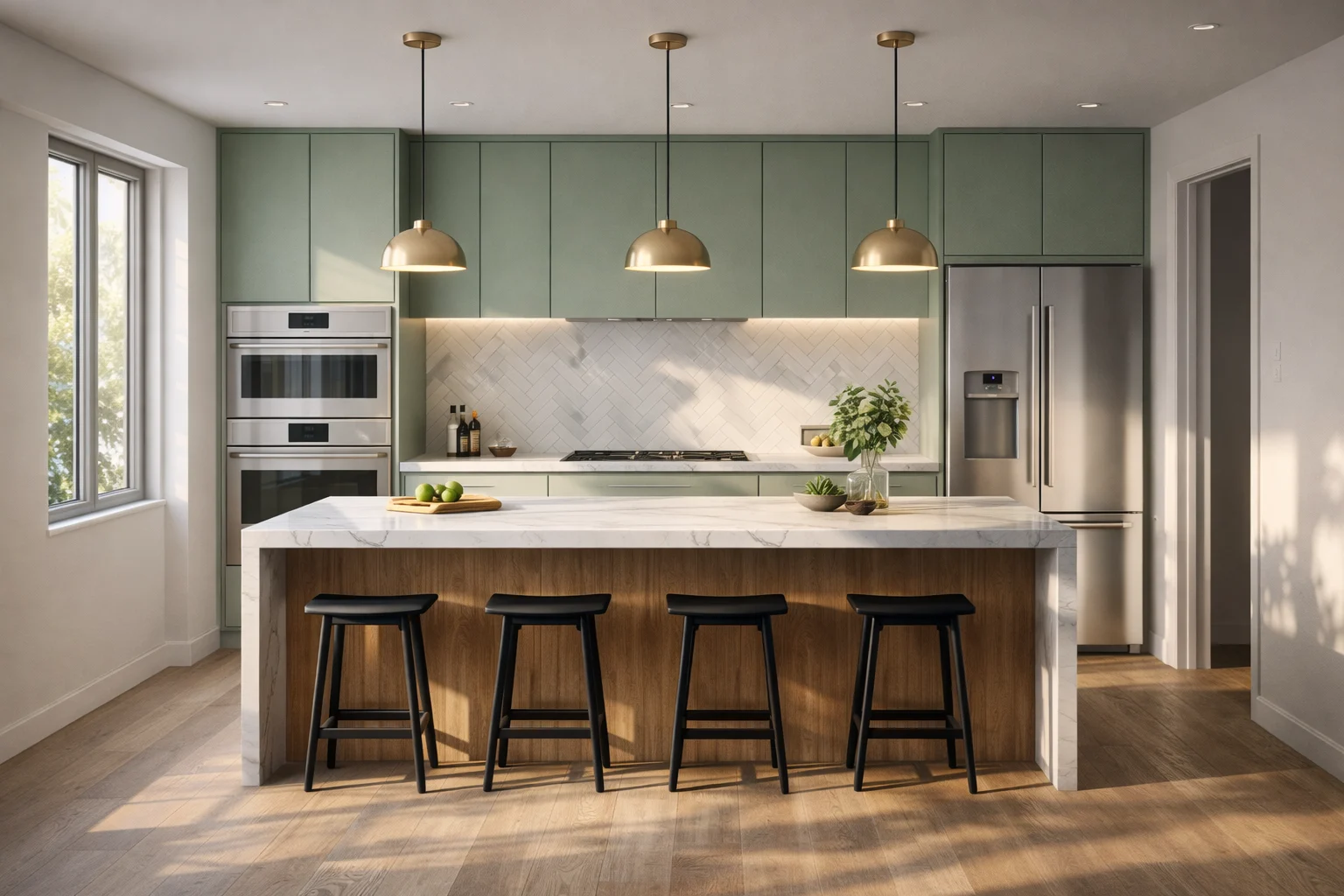
How much does a kitchen renovation cost? In the U.S., the answer can range from a modest five-figure refresh to a six-figure project once you add custom cabinetry, new appliances, plumbing, electrical work, and layout changes. There is no single universal total. The budget is driven by scope, location, labor rates, finish level, and how much of the existing kitchen is being kept.
If you are still deciding on the layout, workflow, and finish choices, start with our kitchen remodeling guide. If you want to build a cost estimate before you call contractors, you can also use the kitchen remodel cost calculator or compare your assumptions with how to estimate renovation costs without a contractor.
How Much Does a Kitchen Renovation Cost?
The broad planning range depends on how much of the kitchen changes. A cosmetic update is one thing. A full renovation with new cabinets, appliances, plumbing, electrical work, and surface finishes is another. The more you move walls, utilities, or major fixtures, the more the total rises.
These ranges are planning estimates, not quotes.
| Project scope | Typical work included | Main cost drivers | Relative cost level | Best suited for |
|---|---|---|---|---|
| Cosmetic refresh | Paint, lighting, hardware, splashback touch-ups, a few fixture swaps | Finishes, labor, small repairs | Low | Kitchens that still function well |
| Partial renovation | Fronts, handles, worktop, selected appliances, minor finishes | Cabinet fronts, worktops, appliance choices | Moderate | Homes keeping the same layout |
| Full replacement, same layout | New cabinets, worktops, appliances, flooring, lighting, installation | Cabinets, appliances, labor, surfaces | High | Most full kitchen remodels |
| Full renovation with technical updates | New cabinets, plumbing, electrical, lighting, flooring, finishes, disposal | Utility work, hidden damage, custom details | Very high | Older kitchens or badly dated layouts |
| Layout-changing or premium remodel | Structural changes, custom cabinetry, premium finishes, new utility routes | Design complexity, labor, custom work, permits | Highest | Projects with major change or luxury finishes |
As a rough guide, many homeowners see costs in these broad planning bands: a cosmetic update around $8,000 to $18,000, a partial renovation around $15,000 to $35,000, a full same-layout renovation around $30,000 to $60,000, a full renovation with utility work around $50,000 to $95,000, and a premium or layout-changing project around $80,000 to $160,000+.
Kitchen Renovation Cost Breakdown
A useful cost breakdown separates the project into categories instead of relying on one headline total. Cabinets, worktops, appliances, plumbing, electrical work, flooring, wall finishes, demolition, installation, delivery, and disposal all contribute to the final bill.
| Category | Typical planning range | What pushes it higher |
|---|---|---|
| Cabinets and storage | $4,000–$25,000+ | Custom sizes, materials, drawers, tall units, integrated appliance housings |
| Worktops | $1,500–$8,000+ | Material, thickness, cutouts, edges, fabrication, access |
| Appliances | $3,000–$15,000+ | Integrated models, size, delivery, installation, disposal of old units |
| Plumbing | $1,500–$8,000+ | Moving the sink, dishwasher connections, new water or waste lines |
| Electrical work | $1,500–$6,000+ | New circuits, outlet changes, lighting redesign, panel limitations |
| Ventilation and lighting | $1,000–$5,000+ | Hood changes, ducting, under-cabinet lighting, task lighting |
| Flooring | $1,500–$7,000+ | Subfloor repairs, transitions, underlayment, finish level |
| Wall finishes and backsplash | $800–$4,000+ | Tile coverage, prep, paint quality, detailed splashback work |
| Demolition, delivery, installation, disposal | $3,000–$10,000+ | Access, haul-away, protection, carrying, cleanup, final carpentry |
| Hidden repairs and contingency | $2,000–$12,000+ | Moisture damage, uneven walls, older wiring, plumbing surprises, scope changes |
Example budget - not a contractor quote
Here is a simple example of how a $60,000 full kitchen renovation budget could be split. The exact mix changes by project, but this shows how the money can be organized when the layout stays the same and the kitchen is fully replaced.
| Budget line | Example allocation | Share |
|---|---|---|
| Cabinets and storage | $13,500 | 22.5% |
| Worktops | $6,000 | 10% |
| Appliances | $8,500 | 14.2% |
| Plumbing | $4,500 | 7.5% |
| Electrical work | $4,500 | 7.5% |
| Ventilation and lighting | $3,000 | 5% |
| Flooring | $3,500 | 5.8% |
| Wall finishes and backsplash | $2,500 | 4.2% |
| Demolition, installation and disposal | $8,500 | 14.2% |
| Contingency | $5,000 | 8.3% |
This example adds up to the full sample budget, but your own split may look very different. If hidden damage appears after demolition, the contingency absorbs part of the shock. If you choose a higher-end cabinet line or premium worktop, that money usually has to come from another category.

A clear scope and a fixed selection list make budget comparisons more reliable.
What Affects Kitchen Renovation Cost the Most?
Several choices move the budget more than people expect. Cabinets usually take a large share of the total, especially when you move beyond stock dimensions. Worktops can also change the price quickly, especially with stone, thick edges, cutouts, seams, and long islands.
The other big driver is utility work. Moving the sink, adding dishwasher connections, changing outlet locations, or redesigning lighting can create separate labor and repair costs. Once walls or floors open up, hidden damage can add more work before the visible finishes even start.
Appliance level matters too. A set of standard freestanding appliances is not priced the same as integrated units, panel-ready appliances, or commercial-style equipment. Delivery access and installation can also move the total if the kitchen is hard to reach.
Cabinets and Storage Costs
Cabinets are often one of the largest categories in any kitchen renovation budget. Stock cabinets are usually the most economical, semi-custom gives you more sizing and finish options, and fully custom cabinetry is the most flexible and usually the most expensive.
Cabinet boxes, fronts, hardware, drawer systems, corner solutions, tall pantry units, and integrated appliance housings all add cost in different ways. Custom sizing can solve awkward spaces, but it also leaves less room for measurement errors.
Worktop Costs
Worktop cost depends on the material, thickness, cutouts, edge profile, seams, backsplash detail, and the effort needed to template and install it. A simple laminate worktop is one kind of budget; a large quartz island with sink and hob cutouts is another.
Maintenance and repairability matter too. The cheapest worktop is not always the cheapest installed choice, especially when fabrication or access is difficult.
Appliance Costs
Appliances can stay moderate or become a major cost driver depending on what you choose. Replacing a fridge and dishwasher is very different from replacing every appliance with integrated, panel-ready units.
Plan appliance size, ventilation, electrical needs, delivery, installation, and disposal of old units before the cabinets are ordered. A mismatched appliance dimension can force cabinet changes that cost more than the appliance upgrade itself.
Plumbing, Electrical Work, and Ventilation Costs
Technical work gets expensive when the kitchen layout changes. Moving the sink, changing the dishwasher connection, adding dedicated appliance circuits, changing outlets, updating lighting, or changing hood ducting all add trades, labor, and repair work.
Use qualified professionals for plumbing, electrical, gas, and ventilation work. The cost of fixing a mistake after the walls are closed is usually much higher than the cost of doing the job correctly during rough-in.
Flooring, Walls, and Finishing Costs
Flooring, wall repair, painting, trim, and splashback work are easy to underestimate because they sit near the end of the project. They still matter to the final budget, especially if the subfloor needs repair, the walls are uneven, or the backsplash needs detailed tile work.
Moisture-resistant finishes, transitions to adjacent rooms, and careful preparation around the sink and cooking zone can also widen the budget.
Demolition, Delivery, Installation, and Disposal
Headline product prices often leave out the work that makes the project possible. Old cabinets need to come out, appliances need to be disconnected, surfaces may need protection, and materials still have to be delivered, carried, stored, installed, cleaned up, and corrected.
These costs are easy to miss when you compare product quotes only. They still have to be paid, and they can become a meaningful part of the total.
Hidden Kitchen Renovation Costs
Hidden costs usually appear after demolition. Moisture damage, rotten subfloor, outdated wiring, plumbing repairs, uneven walls, ventilation changes, difficult access, and extra finishing work can all add budget pressure.
Temporary kitchen arrangements also matter. If the kitchen is out of service for a while, you may need to plan for takeout, a temporary cooktop, storage, or short-term cleanup solutions. That is not a headline item in every quote, but it still affects the real project cost.
How Much Does a Full Kitchen Renovation Cost?
A full kitchen renovation usually means that most of the room is being replaced: cabinets, worktops, appliances, flooring, wall finishes, lighting, installation, and the related plumbing and electrical work. Once those pieces are included, the project moves into a much higher budget band than a simple refresh.
For many homeowners, a full same-layout kitchen renovation lands in the mid-five figures. Projects with layout changes, premium finishes, or hidden repairs can move well into six figures.
How to Build a Realistic Kitchen Renovation Budget
The cleanest way to budget is to separate the project into categories instead of chasing one total number.
- Define the scope. Decide what stays, what is replaced, and what is moved.
- Separate technical work from finishes. Plumbing, electrical, and ventilation are not the same as cabinet style.
- Get comparable quotes. Make sure every quote includes the same work.
- Include delivery and disposal. These are common omissions.
- Add contingency. Older kitchens and layout changes need more buffer.
- Freeze major decisions early. Late changes usually cost more.
If you want a kitchen-specific estimate workflow, the kitchen remodel cost calculator can help you sanity-check your numbers before you request quotes.
Where You Can Save
- Keep the existing layout when it still works.
- Reuse cabinet boxes that are structurally sound.
- Replace fronts or hardware instead of full cabinets when possible.
- Choose standard cabinet sizes instead of custom dimensions.
- Compare worktop materials on installed cost, not retail price alone.
- Delay optional upgrades that do not change daily use.
- Order only after final measurements are confirmed.
- Compare quotes using the same scope and exclusions.
Where You Should Not Cut Costs
Some items are worth paying for because a cheap version can create a larger problem later. Electrical work, plumbing, gas, ventilation, structural changes, accurate cabinet installation, worktop templating, and moisture-related repairs should not be chosen purely on price.
These are the places where a bad decision can lead to rework, delays, or damage to new finishes.
DIY vs. Professional Work
Some jobs can be handled safely by confident homeowners, but technical work should stay with qualified trades. If you want to reduce labor spend, focus on lower-risk tasks and leave the critical systems to professionals.
- Possible DIY: clearing the kitchen, painting, simple handle replacement, final decorating, and selected removal work where safe.
- Best left to professionals: electricity, plumbing, gas, ventilation, worktops, complex cabinetry, and technical connections.
For a broader sense of what can be handled outside a trade contract, see our DIY renovation guide.
Common Kitchen Budget Mistakes
- Comparing quotes that do not include the same scope.
- Buying appliances after cabinets are already ordered.
- Forgetting delivery, disposal, and temporary storage.
- Changing the layout too late in the process.
- Ignoring hidden damage in walls, floors, or wiring.
- Focusing only on cabinet price and ignoring installation.
- Ordering before final measurements are confirmed.
- Having no contingency reserve.
- Choosing finishes without considering installed cost.
- Paying the final amount before defects are corrected.
Frequently Asked Questions
How much does a kitchen renovation cost?
A cosmetic refresh may cost around $8,000 to $18,000, while partial and full renovations usually move into the mid-five figures and higher depending on scope, labor, and finish level.
How much does a full kitchen renovation cost?
A full kitchen renovation commonly lands around $30,000 to $60,000 for a same-layout project, with technical changes and premium finishes pushing the total much higher.
What is the most expensive part of a kitchen renovation?
Cabinets, worktops, appliances, and plumbing or electrical changes usually drive the largest shares of the budget.
What affects kitchen remodel cost the most?
Scope, layout changes, labor rates, cabinet quality, appliance level, and hidden damage are usually the biggest cost drivers.
Is it cheaper to keep the same kitchen layout?
Usually yes, because keeping the main utility locations in place often reduces plumbing, electrical, and repair costs.
How much contingency should I include?
A contingency of about 10% to 20% is a practical range for many kitchen projects, especially when the kitchen is older or the walls and floors will be opened up.
Can existing kitchen cabinets be reused?
Yes, sometimes. If the cabinet boxes are still structurally sound, reusing them can lower the total budget while allowing for new fronts, hardware, or worktops.
Which costs are commonly forgotten?
Delivery, disposal, demolition, hidden repairs, temporary kitchen arrangements, and final cleanup are commonly forgotten in early budget drafts.
Which kitchen renovation jobs need professionals?
Plumbing, electrical, gas, ventilation, worktops, complex cabinetry, and structural changes are usually best handled by qualified professionals.
When should the final payment be made?
Final payment should wait until the agreed work is complete and the main defects have been checked and corrected.
Conclusion
How much a kitchen renovation costs depends on scope more than anything else. The biggest budget drivers are cabinets, worktops, appliances, labor, plumbing, electrical work, and whether the layout changes. Hidden damage, delivery, disposal, and contingency can move the total even more than a single finish choice.
To keep the budget under control, compare quotes against the same written scope, lock in major selections before work starts, and keep a reserve for surprises. Re:Build can help you organize budget categories, track materials, separate DIY and professional work, and keep project progress in one place.
If this kitchen sits inside a larger remodel, our home renovation guide can help you see how the project fits into the wider sequence.