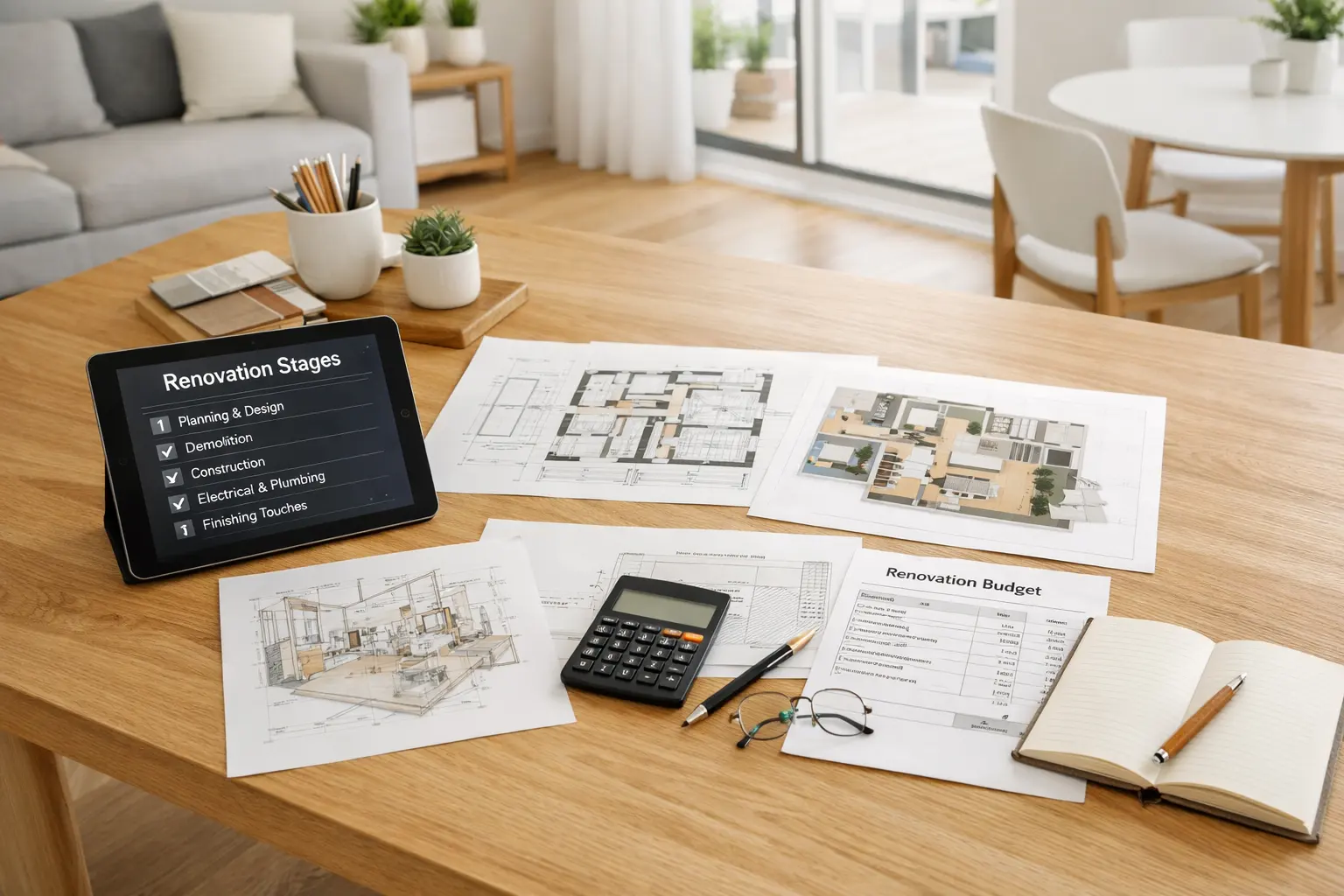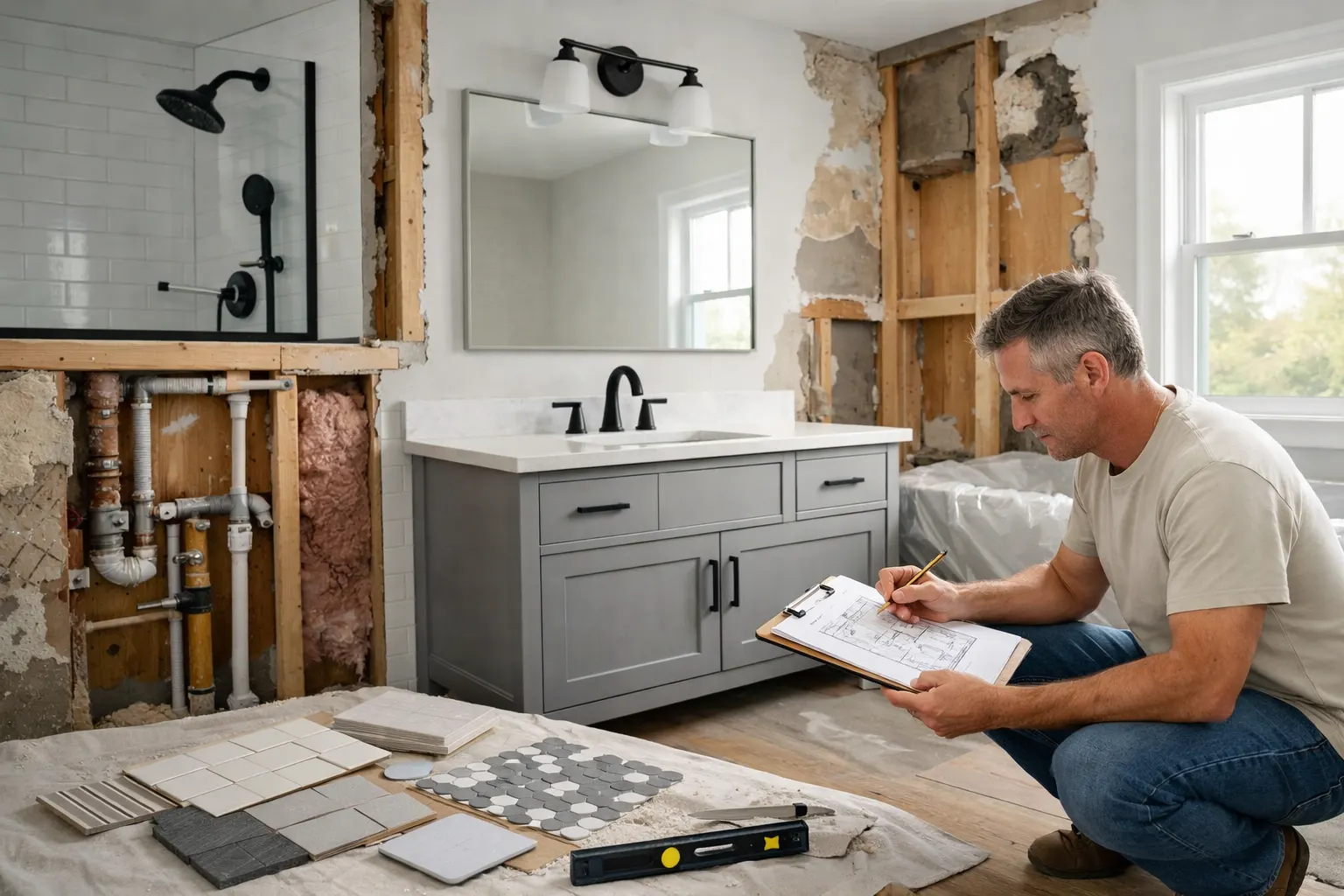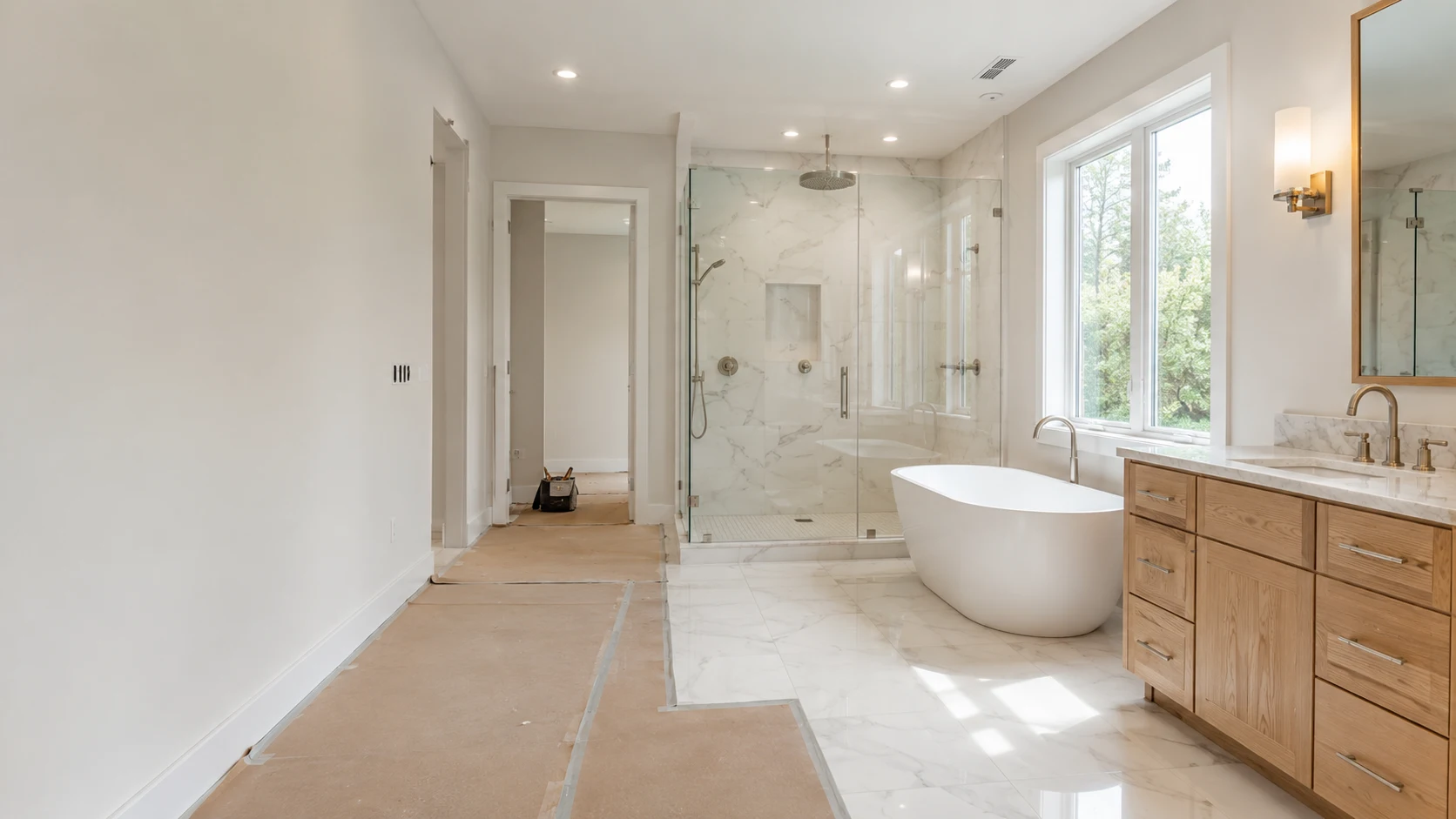
How much does a master bath remodel cost? In the U.S., a realistic planning range for a primary bathroom is often about $20,000 to $65,000, with cosmetic updates below that and layout-changing projects much higher. Master bath and primary bathroom mean the same thing here: the main full bathroom attached to the primary bedroom.
The final budget depends on scope more than square footage. Plumbing layout, labor, waterproofing, tile coverage, fixture quality, permits and hidden damage can move the price far more than size alone. If you are still shaping the project, start with our home renovation guide and keep a renovation planning checklist nearby.
How Much Does a Master Bath Remodel Cost?
The ranges below include labor and materials unless a note says otherwise. A master bathroom remodel usually includes demolition, plumbing, electrical work, waterproofing, tile, flooring, shower or tub work, a vanity, lighting, ventilation and cleanup.
| Project level | Planning range | Typical scope | Plumbing locations? |
|---|---|---|---|
| Cosmetic update | $8,000–$18,000 | Paint, mirror, lighting and a few fixture swaps | Yes, usually unchanged |
| Basic remodel | $20,000–$35,000 | New vanity, basic tile, standard shower or tub, limited plumbing changes | Mostly unchanged |
| Mid-range full remodel | $35,000–$65,000 | Demolition, new shower, upgraded tile, new vanity and updated electrical | Maybe partially |
| High-end remodel | $65,000–$110,000 | Premium tile, custom shower, double vanity and upgraded lighting | Sometimes changed |
| Luxury or layout-changing remodel | $90,000–$180,000+ | Layout changes, custom cabinetry, curbless shower and premium stone | Often changed |
What homeowners usually mean by a master bathroom remodel: a project that replaces the shower or tub, vanity, tile, flooring, lighting and fixtures, and may also involve plumbing, electrical work, waterproofing, storage upgrades and a new layout.
For a broader remodeling sequence, our bathroom remodel guide explains how scope, sequence and planning work together before the bids come in.
Master Bathroom Remodel Cost by Size
Square footage matters, but it is not the whole story. A compact primary bathroom can still be expensive per square foot because plumbing, electrical work, demolition and fixtures create fixed costs. A larger master bath becomes expensive when it includes a separate tub and shower, a double vanity or extensive wall tile.
| Size | Basic remodel | Mid-range remodel | High-end remodel |
|---|---|---|---|
| 40 sq ft | $18,000–$28,000 | $28,000–$45,000 | $45,000–$70,000 |
| 60 sq ft | $22,000–$35,000 | $35,000–$55,000 | $55,000–$90,000 |
| 80 sq ft | $26,000–$40,000 | $40,000–$65,000 | $65,000–$105,000 |
| 100 sq ft | $30,000–$45,000 | $45,000–$75,000 | $75,000–$125,000 |
| 120 sq ft | $34,000–$50,000 | $50,000–$85,000 | $85,000–$140,000 |
| 150 sq ft | $40,000–$60,000 | $60,000–$100,000 | $100,000–$160,000+ |
These ranges are planning estimates, not quotes. A 150-square-foot master bath can still be cheaper than a 100-square-foot room if the smaller room needs more plumbing relocation or custom work.
Master Bathroom Remodel Cost per Square Foot
Square-foot pricing is useful for a rough first pass, but it can be misleading because several costs behave like fixed costs rather than square-foot costs.
| Project level | Planning range per sq ft | Why it moves |
|---|---|---|
| Basic remodel | $350–$650 | Fewer plumbing changes and simpler finishes keep the price closer to the low end. |
| Mid-range remodel | $500–$900 | New tile, shower work, upgraded fixtures and moderate layout adjustments raise the total. |
| High-end remodel | $900–$1,500+ | Custom tile, premium fixtures, custom cabinets and layout changes can drive costs well above the starting range. |
Use square-foot estimates only as a shortcut. They do not account for a toilet, vanity, shower valve, bathtub, permits, demolition, ventilation or plumbing connections.
If you want a broader household baseline as you compare scopes, the renovation cost calculator can help you sanity-check the whole project before you lock in the bathroom scope.
Sample Master Bathroom Remodel Cost Breakdown
This example budget assumes a 90-square-foot primary bathroom with a separate shower and bathtub, mid-range finishes, and no structural surprises. It is illustrative, not a contractor quote.
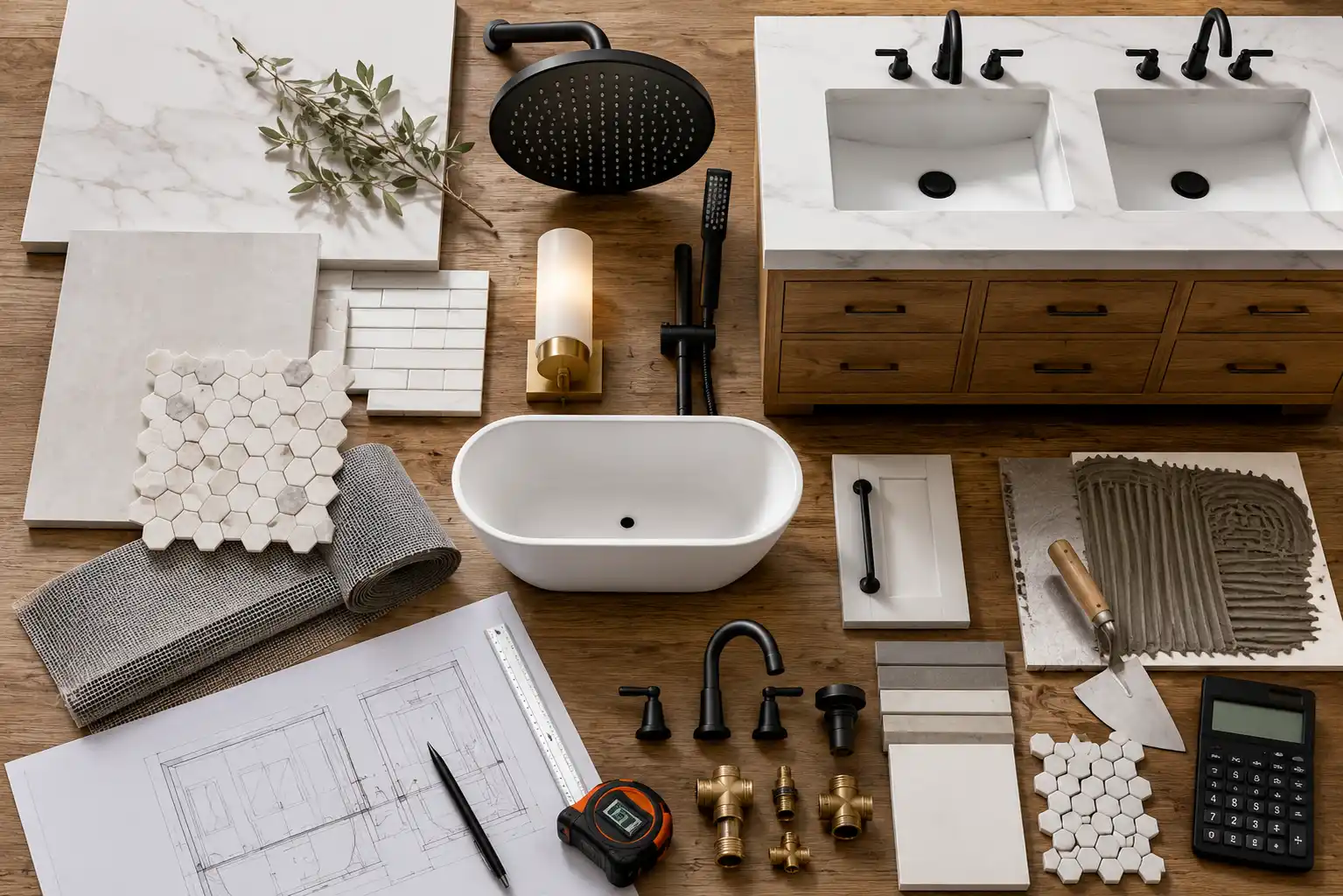
Break the project into labor, fixtures, finishes and contingency before the bids arrive.
| Cost component | Planning range | Example budget |
|---|---|---|
| Demolition and disposal | $1,500–$3,500 | $2,400 (4.1%) |
| Plumbing labor and rough materials | $4,000–$10,000 | $6,200 (10.5%) |
| Electrical work | $1,500–$4,000 | $2,400 (4.1%) |
| Framing or drywall | $1,000–$3,000 | $1,700 (2.9%) |
| Waterproofing | $1,200–$3,500 | $2,100 (3.6%) |
| Tile labor | $4,000–$10,000 | $6,000 (10.2%) |
| Tile materials | $2,500–$7,500 | $4,500 (7.6%) |
| Shower system | $6,000–$18,000 | $10,500 (17.8%) |
| Bathtub | $2,000–$8,000 | $4,200 (7.1%) |
| Toilet | $300–$1,200 | $700 (1.2%) |
| Vanity | $1,500–$7,000 | $3,800 (6.5%) |
| Countertop | $800–$3,500 | $1,700 (2.9%) |
| Faucets | $400–$1,800 | $900 (1.5%) |
| Lighting | $500–$3,000 | $1,400 (2.4%) |
| Exhaust fan | $250–$1,200 | $650 (1.1%) |
| Mirrors and accessories | $300–$1,500 | $850 (1.4%) |
| Painting | $400–$1,500 | $750 (1.3%) |
| Permits | $300–$2,000 | $900 (1.5%) |
| Cleanup | $300–$1,000 | $450 (0.8%) |
| Contingency | $4,500–$10,000 | $6,800 (11.5%) |
| Illustrative total | $55,500–$100,500 | $58,900 (100%) |
The point of this example is to show how the money gets split. Labor and tile work can dominate quickly, but fixtures and hidden repair items still move the total by thousands of dollars.
Labor vs. Material Costs
Labor often takes a large share of the budget because the work involves multiple trades and a lot of coordination. A practical planning split is often around 35%–55% labor, 25%–40% fixtures and finishes, 10%–20% rough materials, and 10%–20% contingency.
- Labor: trades, installation and cleanup.
- Fixtures and finishes: vanity, tub, shower, toilet, faucets and tile.
- Rough materials: drywall, waterproofing, trim and fasteners.
- Design and permits: drawings, permits and inspections.
- Contingency: money reserved for unknowns.
Cost by Project Component
Looking at the budget by component is often more useful than chasing a single average. The range for each item expands when the job becomes custom, upgraded or tied to plumbing relocation and hidden repairs.
| Component | Planning range | Why the range widens |
|---|---|---|
| Demolition and disposal | $1,500–$3,500 | Debris volume and haul distance. |
| Plumbing | $4,000–$12,000 | Moves, reroutes and older pipes. |
| Electrical work | $1,500–$6,000 | Circuits, lighting and heated floors. |
| Waterproofing | $1,500–$4,500 | Shower size and substrate prep. |
| Drywall or cement board | $1,000–$3,500 | Repairs and moisture-resistant backing. |
| Tile installation | $4,000–$12,000 | Tile size, layout and cuts. |
| Flooring | $2,500–$8,000 | Material choice and leveling. |
| Walk-in shower | $8,000–$20,000 | Custom pan, glass and tile complexity. |
| Bathtub | $2,500–$12,000 | Tub type and plumbing support. |
| Toilet | $300–$1,200 | Model and drain work. |
| Vanity | $1,500–$8,000 | Cabinet size and finish. |
| Countertop | $800–$4,000 | Stone choice and cutouts. |
| Faucets | $300–$2,000 | Finish and rough-in changes. |
| Lighting | $500–$3,000 | Layers, dimmers and rewiring. |
| Ventilation | $400–$2,000 | Fan size and ducting. |
| Mirrors and accessories | $200–$1,500 | Size and mounting. |
| Painting | $400–$1,500 | Prep and moisture-resistant paint. |
| Custom cabinetry | $3,000–$15,000 | Specialty storage and carpentry. |
Walk-In Shower Remodel Cost
A walk-in shower often pushes a remodel toward the mid-range or high-end category because the shower itself becomes a mini-project. Costs rise with waterproofing, tile, glass and drain work. A prefabricated shower base is usually cheaper than a custom shower pan, while a curbless shower may require floor adjustments or structural changes.
- Lower-cost version: prefabricated base, standard tile and a framed glass door.
- Mid-range version: custom tile, linear drain, built-in niche and better glass.
- Higher-cost version: curbless entry, full-height tile, bench seating, multiple showerheads and frameless glass.
Bathtub and Tub-Shower Costs
Keeping an existing tub is the cheapest route. Replacing an alcove tub is still usually less expensive than building a separate soaking tub area. A freestanding tub can add delivery, floor support and plumbing costs that are easy to overlook.
If the master bath needs both a shower and a tub, the budget typically rises because the room needs more tile, more plumbing, more wall space and more labor.
Vanity, Countertop and Storage Costs
A single vanity is usually simpler and cheaper than a double vanity, but a primary bathroom often benefits from two sinks and more storage. Stock vanities are the least expensive. Semi-custom and custom cabinets cost more because of size, finish, drawer systems and installation complexity.
Countertop costs rise with natural stone, thick edges, integrated sinks and multiple cutouts. A bathroom with a wall-to-wall vanity or built-in linen storage can jump quickly once carpentry and finish work are added.
Tile and Flooring Costs
Tile is one of the biggest variables in a master bathroom remodel. Ceramic tile is usually the most affordable, porcelain sits in the middle, and natural stone or intricate mosaic work can cost much more. Large-format tile can look simple, but the labor often increases because the substrate must be flatter and the cuts must be cleaner.
Tile labor and surface prep can cost more than the tile itself. That is especially true in showers, on accent walls, around niches and benches, and on floors that need leveling before the tile goes down.
Sample Cost by Project Component
Use component-level pricing to build your own master bathroom remodeling budget. Each range below reflects both labor and materials unless a contractor separates them out.
| Component | Planning range | What pushes it higher |
|---|---|---|
| Plumbing | $4,000–$12,000 | Fixture moves, slab access, older pipes, vent changes |
| Electrical | $1,500–$6,000 | New circuits, lighting design, heated floors, fan upgrades |
| Waterproofing | $1,500–$4,500 | Shower size, curbless detail, membrane system, substrate repair |
| Tile and flooring | $6,000–$20,000 | Large-format tile, stone, shower ceilings, niches, floors needing leveling |
| Shower | $8,000–$20,000 | Custom pan, linear drain, frameless glass, benches, premium tile |
| Bathtub | $2,500–$12,000 | Freestanding tub, floor support, plumbing and delivery complexity |
| Vanity and countertop | $2,500–$15,000 | Double vanity, custom cabinets, stone slab, plumbing cutouts |
| Fixtures and lighting | $1,500–$6,000 | Premium finish, shower systems, layered lighting, smart controls |
| Permits and design fees | $500–$5,000+ | Design support, drawings, permit fees and inspections where required |
These are planning ranges. One contractor may bundle items together while another breaks them out line by line. Compare the same scope, not just the total.
Plumbing and Layout Change Costs
Keeping the existing bathroom layout is usually the most affordable move. Once you move the toilet, shower, tub or vanity, the cost to remodel a master bathroom can rise fast because the plumber may need to reroute drains and supply lines.
Slab foundations, floor joists, old pipes and limited access can make the work harder.
Electrical, Lighting and Ventilation Costs
Primary bathrooms often need more than a single light fixture and one outlet. New circuits, GFCI protection, vanity sconces, recessed lighting, heated floors and an upgraded exhaust fan can all add to the budget. Local electrical requirements and permit rules vary, and older panels can force an upgrade that was not part of the original budget.
Permits, Design and Professional Fees
Not every project needs the same paperwork, but many master bathroom remodels involve some mix of permit fees, drawings, design help or inspections. A designer can be worth it if you are trying to fit a separate shower, tub and double vanity into a tight room.
Hidden and Frequently Forgotten Costs
Some of the biggest budget mistakes happen outside the visible finishes. Older homes can hide water damage, mold, rotten subfloor, bad framing, outdated wiring or corroded plumbing, and those issues can add thousands once the walls are open.
- Permit fees and inspections.
- Debris removal and dumpster rental.
- Delivery charges and storage.
- Temporary bathroom arrangements.
- Extra tile for cuts and waste.
- Final cleaning and touch-up work.
- Change orders and old-home remediation.
These items are a big reason a bathroom renovation budget can slip. A solid estimate should mention them before the first demo day.
How Much Contingency Should You Add?
A contingency reserve of 10% to 20% is a practical planning range for many master bathroom remodels. Older homes, known water damage or heavy layout changes may justify more. Contingency is for real surprises and required corrections, not optional upgrades.
Basic vs. Mid-Range vs. Luxury Master Bathroom Remodel
| Level | Typical planning range | What you usually get |
|---|---|---|
| Basic | $20,000–$35,000 | Standard finishes, limited plumbing changes, practical fixture updates |
| Mid-range | $35,000–$65,000 | Better tile, new shower, upgraded vanity, improved lighting and storage |
| High-end | $65,000–$110,000 | Premium finishes, custom shower, double vanity, better storage and more detailed labor |
| Luxury or layout-changing | $90,000–$180,000+ | Custom cabinetry, curbless shower, premium stone, relocation of plumbing and electrical elements |
In practical terms, a luxury master bathroom remodel cost reflects more than finishes. It usually means custom layout work, premium materials and more labor.
Can You Remodel a Master Bathroom in Phases?
Yes, but phased work is only cheaper when the phases are truly independent. If you install the vanity now and tear it back out later, you may pay twice. Phased work makes the most sense for cosmetic items such as paint, mirrors, faucets or lighting.
What Can You DIY?
Some tasks may be reasonable for a capable homeowner: painting, removing accessories, assembling a stock vanity and cleanup. Waterproofing, plumbing, electrical work and custom shower installation are usually better left to qualified professionals.
How to Reduce Master Bathroom Remodel Costs
- Keep the toilet, shower, tub and vanity in their existing locations when possible.
- Use stock or semi-custom cabinets.
- Choose a prefabricated shower base if you can.
- Mix premium and mid-range finishes.
- Limit full-height tile to wet zones.
- Order long-lead fixtures early.
- Compare bids with the same written scope.
- Confirm what is excluded before you sign.
- Keep contingency intact until the project is done.
- Avoid mid-project scope changes.
How to Compare Contractor Estimates
The cheapest bid is not always the least expensive project. Compare the same scope line by line: demo, plumbing, electrical, waterproofing, tile labor, fixtures, permits, cleanup, allowances and exclusions.
If one contractor includes removal, prep and cleanup and another does not, the numbers are not comparable. Use the renovation cost estimation guide for a manual first pass before you request bids.
How Long Does a Master Bathroom Remodel Take?
Timing depends on the scope. A cosmetic update may take 1 to 2 weeks, a standard full remodel 2 to 4 weeks, and a layout-changing or custom project 4 to 8 weeks or longer. Permits, inspections, material lead times, drying time and trade scheduling can add days or weeks.
Common Budgeting Mistakes
- Budgeting only for visible fixtures.
- Forgetting demo and disposal.
- Underestimating labor on tile, plumbing and waterproofing.
- Choosing a contractor only by the lowest number.
- Ignoring allowances and exclusions.
- Changing selections after work starts.
- Not reserving contingency for hidden damage.
- Assuming every square foot costs the same.
For a deeper look at how budgets go sideways, see why renovation budgets fail.
Frequently Asked Questions
How much does a master bath remodel cost?
A master bath remodel often falls between about $20,000 and $65,000 for a mid-range project, with smaller updates below that and high-end remodels much higher.
How much does a master bathroom remodel cost per square foot?
A broad early-planning range is about $350 to $1,500+ per square foot depending on scope, fixtures and whether the layout changes.
What is the average cost to remodel a master bathroom?
There is no single reliable national average, but many projects cluster in the $35,000 to $65,000 range when they include new finishes and updated fixtures.
How much does an 80-square-foot master bathroom remodel cost?
An 80-square-foot master bathroom often falls around $24,000 to $40,000 for a basic remodel, $40,000 to $65,000 for mid-range work, and $65,000 to $105,000 for a high-end project.
How much does a 100-square-foot master bathroom remodel cost?
A 100-square-foot master bathroom commonly lands around $30,000 to $45,000 for a basic remodel, $45,000 to $75,000 for mid-range work, and $75,000 to $125,000 for high-end finishes.
What is the most expensive part of a master bathroom remodel?
Plumbing changes, custom shower construction, premium tile and hidden repair work are often the biggest cost drivers.
How much should I budget for labor?
Labor often takes a large share of the budget, frequently around 35% to 55% depending on plumbing, tile and custom detailing.
Is it cheaper to keep the existing bathroom layout?
Usually yes. Keeping the toilet, shower, tub and vanity in the same locations often reduces plumbing work and keeps the remodel more affordable.
How much contingency should I include?
A contingency reserve of about 10% to 20% is a practical planning range for many projects, and older homes or layout changes may justify more.
Can I remodel a master bathroom for $20,000?
A $20,000 budget can work for a limited cosmetic update or a very small, basic remodel, but it is usually tight for a full master bathroom renovation.
Does a walk-in shower cost more than a bathtub?
Often yes. A custom walk-in shower can cost more than a standard bathtub because of waterproofing, tile, glass, drain work and labor.
How long does a full master bathroom remodel take?
A cosmetic update may take 1 to 2 weeks, a standard full remodel 2 to 4 weeks, and a layout-changing or custom project 4 to 8 weeks or more.
Conclusion
A realistic master bath remodel budget in the U.S. often starts in the low tens of thousands and moves upward quickly once you add plumbing work, waterproofing, tile and higher-end fixtures. The layout, labor and finish level matter more than size alone.
To control the budget, compare estimates against the same written scope, keep a contingency reserve and lock in major selections before work begins. Re:Build can help you keep the stages, tasks, materials, estimated budget and project progress organized in one place.